Water is treated almost everywhere as a way to adapt to climate change. It is also a direct and low cost way to cut greenhouse gas emissions, and today’s funding rules keep that value out of reach. Counting and financing water as mitigation would bring in private capital and lower emissions without slowing development.
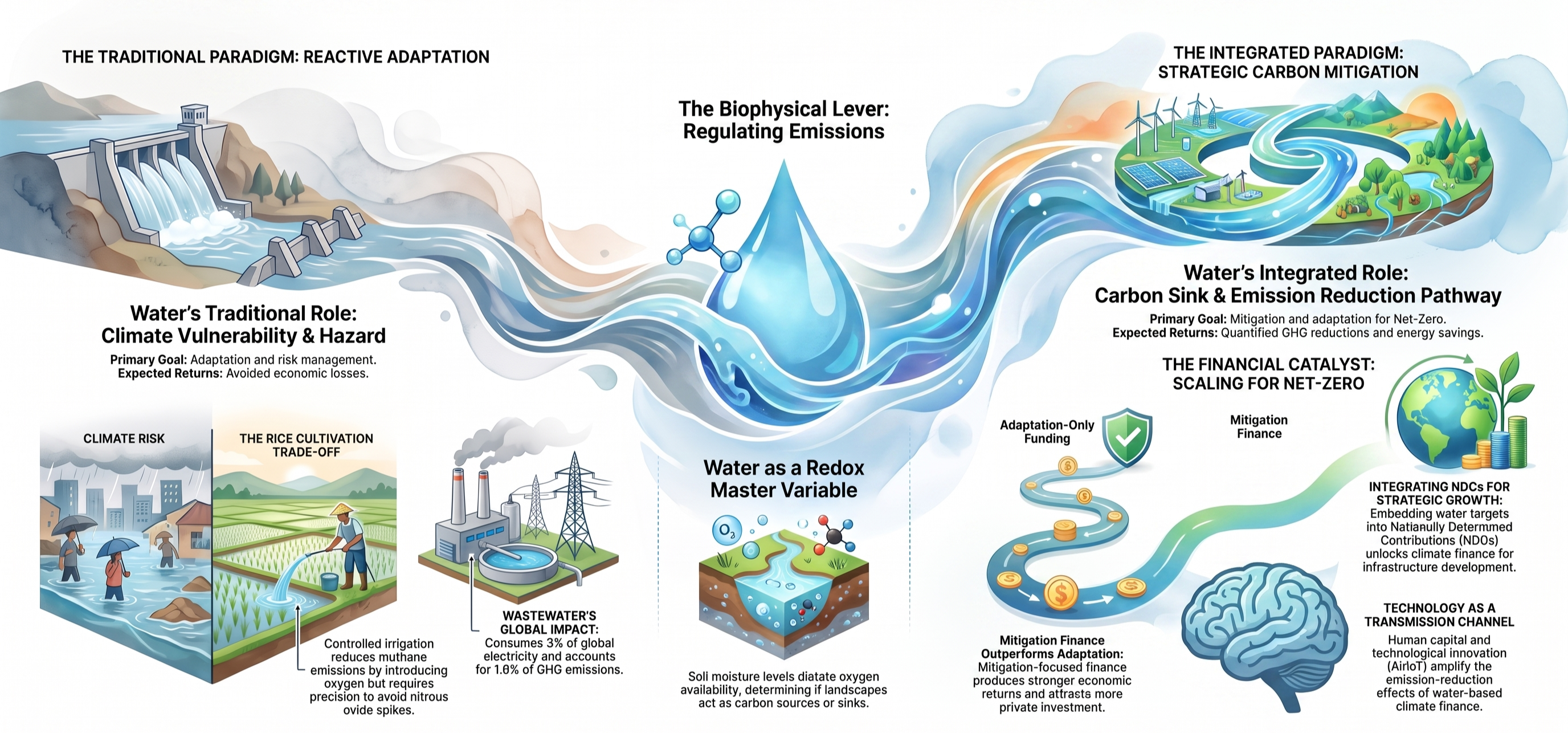
Climate policy files water under adaptation, so it competes for a small pool of public money and gets judged by the disasters it helps avoid. Those benefits are real but hard to price. As a result, the emissions that better water management could prevent go uncounted and unfunded.
What the evidence shows.
- Flooded rice fields are one of the largest farm sources of methane. Draining them at the right time restores oxygen to the soil and sharply reduces that methane.
- Balance matters. Draining too hard raises nitrous oxide, another warming gas. Moderate, well timed irrigation lowers total emissions while protecting yields.
- Water systems beyond farming, including wastewater treatment, also produce emissions that better management can cut.
Why funding is the barrier. Money follows countable tons of avoided emissions. Projects labeled mitigation attract private investors and green bonds. Projects labeled adaptation do not. Efficient irrigation and cleaner wastewater systems reduce emissions, yet the adaptation label keeps them dependent on grants instead of investment.
Recommendations.
- Recognize water management as a mitigation strategy in national climate plans and finance frameworks.
- Set clear methods to measure and verify the emissions avoided by irrigation and wastewater upgrades, so these projects can draw private capital.
- Favor projects that raise incomes and cut emissions at the same time, especially in fast growing economies building new infrastructure.
- Fund the people, not only the equipment. Pair technology with training and local institutions so systems keep working.
- Direct support to the regions most exposed to climate impacts, so the benefits reach them first.