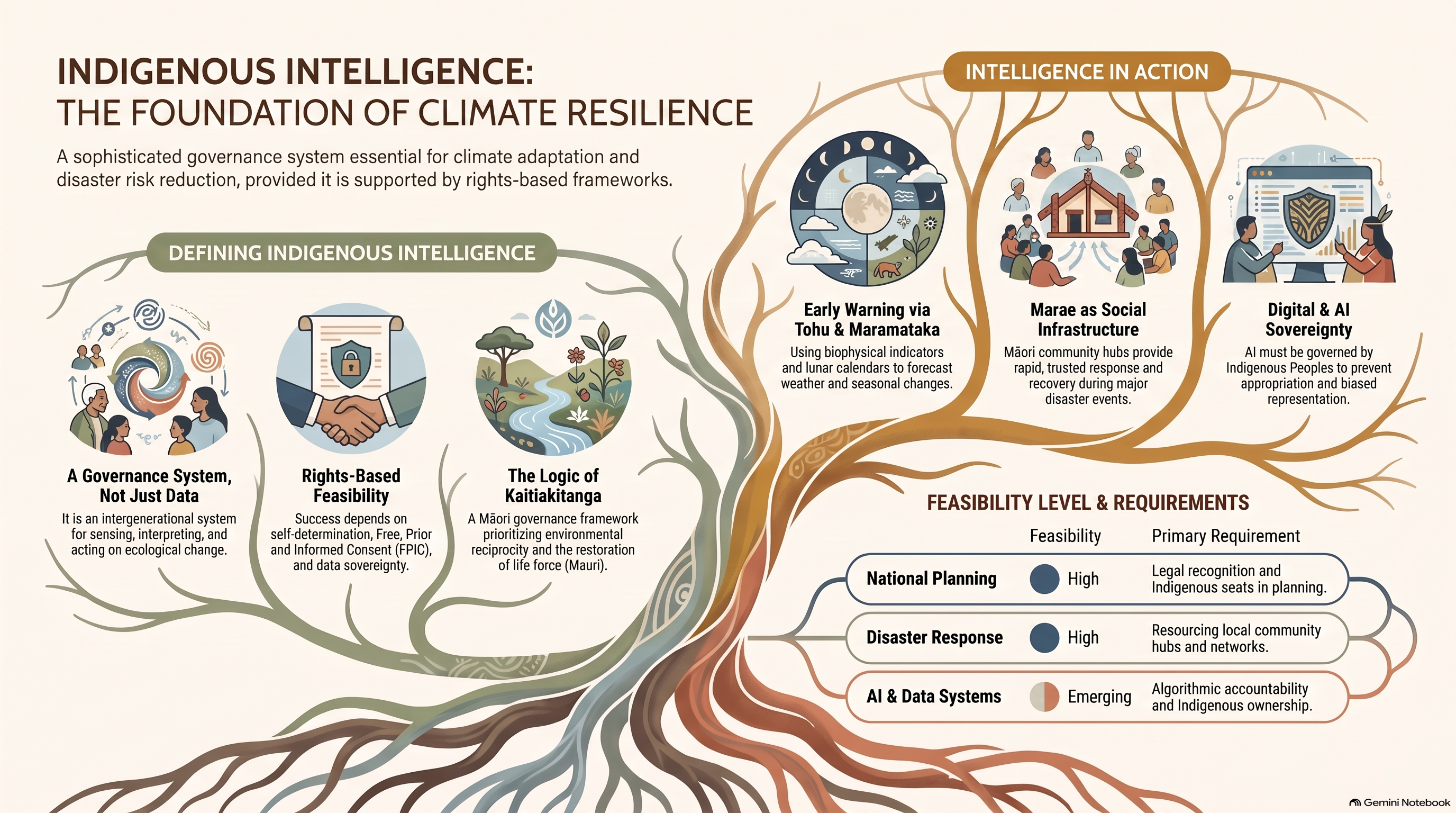
Every 9 August, the world pauses for the International Day of the World’s Indigenous Peoples. The date was set by General Assembly resolution 49/214, and it marks the first meeting, in 1982, of the Working Group on Indigenous Populations. Commemoration is easy. What the day now demands is harder, and it starts with language. We should stop calling it traditional knowledge, a phrase that files living practice away as heritage, and start calling it Indigenous intelligence. Intelligence is what it actually is a governed system for sensing change, interpreting risk, deciding together and passing learning forward.
Look at what two decades of official themes reveal. From 2006 to 2010 the emphasis fell on rights, dignity and reconciliation. From 2011 to 2017 it moved to the machinery of justice, treaties, education and media. From 2018 to 2022 it turned to crisis, migration, pandemic resilience and the knowledge held by Indigenous women. Since 2023, the themes have looked forward, to youth leadership, to artificial intelligence and data sovereignty, and in 2026 to Indigenous midwives. Read in sequence, the arc is unmistakable. The conversation has moved from recognition to governance, from being seen to holding power, from asking whether Indigenous Peoples have a voice to asking who controls the land, the data and the ethics of the technology now being built on both.

That shift happened for a reason. Indigenous Peoples are less than 6% of humanity, yet they speak most of the world’s roughly 7,000 languages and hold tenure rights over about 38 million square kilometres across 87 countries, more than a quarter of the land surface, intersecting some 40 per cent of terrestrial protected areas. You cannot design a credible climate strategy around territory of that scale while treating the people who govern it as consultees. The numbers also discipline our claims. The familiar line that Indigenous territories hold 80 per cent of global biodiversity has been challenged in the scientific literature, and the tenure-based figures are stronger ground. Overstated advocacy is fragile advocacy.
Aotearoa New Zealand shows what this looks like in practice. Māori read tohu, biophysical indicators such as flowering and animal behaviour, and use maramataka, the lunar calendar, to anticipate seasons, plant, fish and harvest. This is forecasting with a governance layer attached, validated across generations. Climate change is now bending those signals, because sea temperatures and flowering patterns are shifting, and some indicators can no longer be read as they once were. The answer is not to discard them and it is not simply to collect more data. It is co-production, where community observation and instrumental monitoring calibrate each other under community control.
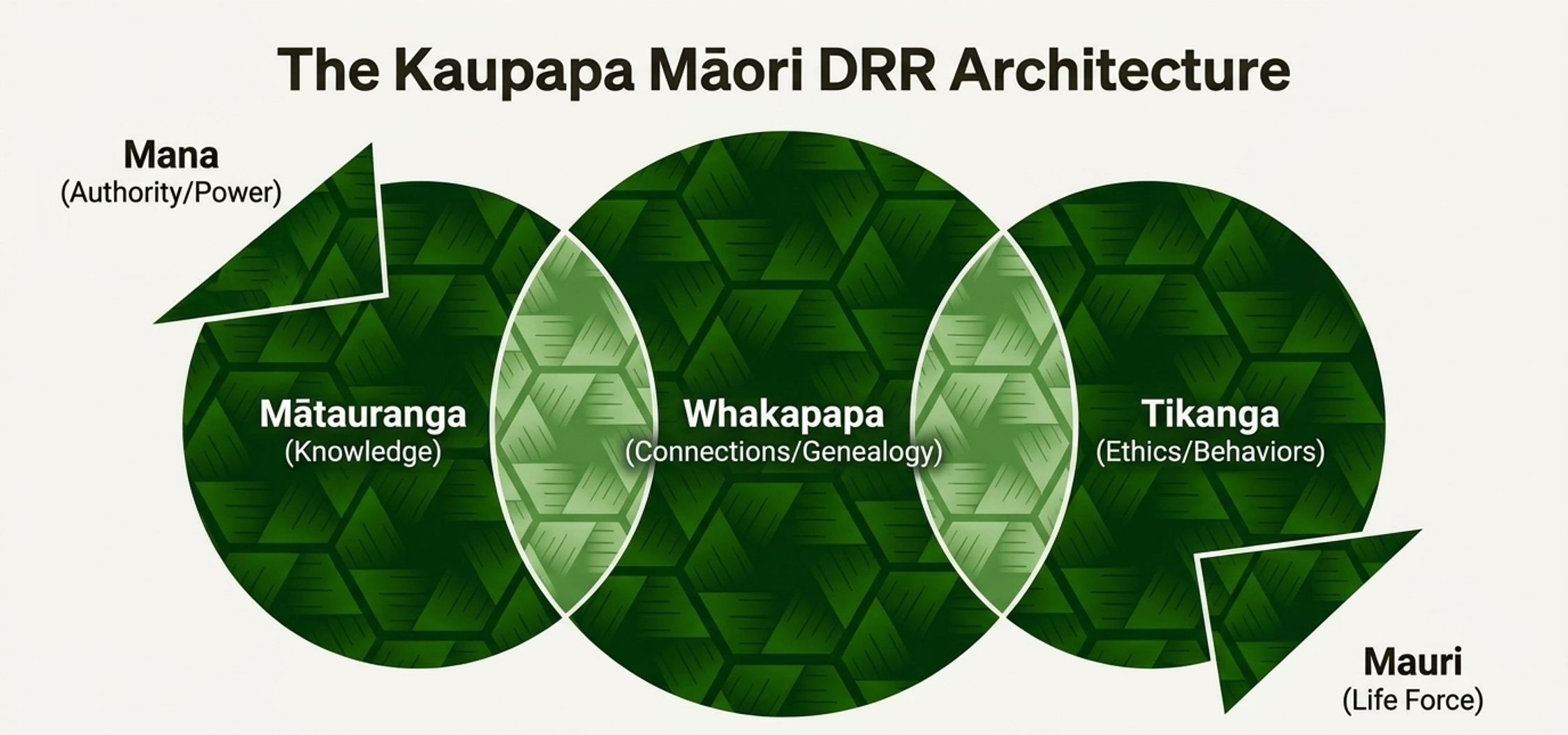
When disaster arrives, the value becomes concrete. After the Canterbury and Christchurch earthquakes, marae became command centres, hosting emergency services and support workers because the relationships and the authority already existed. After Cyclone Gabrielle, the government committed NZ$15 million to Māori communities, including NZ$9 million through Te Puni Kokiri, and it funded generators, communications gear, solar power and food distribution, an acknowledgement that marae were the front line for isolated places. Yet research on 869 marae found one in three at flood risk and one in five inside tsunami evacuation zones. The institutions we lean on hardest in an emergency are themselves exposed, and we have not paid to fix that.
The digital frontier raises the stakes again. Artificial intelligence can support language revitalisation and better forecasting, or it can repeat old patterns of appropriation with faster machinery. The distinction that matters is between relational intelligence, which is accountable to a place and a people, and extractive computation, which harvests without consent. This is not an abstract worry. Research finds that 54 % of energy transition mineral projects sit on or near the lands of land-connected peoples. The hardware behind the algorithm comes from somewhere. Free, prior and informed consent has to cover the minerals as well as the metadata.
So what should the world take from this? Five things. Recognise Indigenous authority before the disaster, because leadership cannot be improvised in the middle of one. Finance social infrastructure, not only sea walls, since staffing, radios and generators save lives. Run dual evidence systems that pair local indicators with hydrology and geospatial science while respecting data sovereignty. Extend consent into climate technology so that sensing, modelling and monitoring serve collective benefit. Measure restoration and reciprocity, not only protected assets.
The stakes are not metaphorical. Global Witness recorded 196 land and environmental defenders killed in 2023, with Indigenous Peoples heavily overrepresented. People are dying to protect the ecosystems our adaptation plans quietly depend on.
Indigenous intelligence is a governance system. Any resilience strategy that ignores land tenure and data sovereignty is not merely impolite. It is technically weak and legally exposed. The future we need will be built by institutions willing to share authority, and 9 August is a good day to start.

The Operational Framework of Indigenous Intelligence