Fifteen weeks separate Stockholm from Abu Dhabi, long enough to make three water finance instruments so ordinary that any country can simply request them
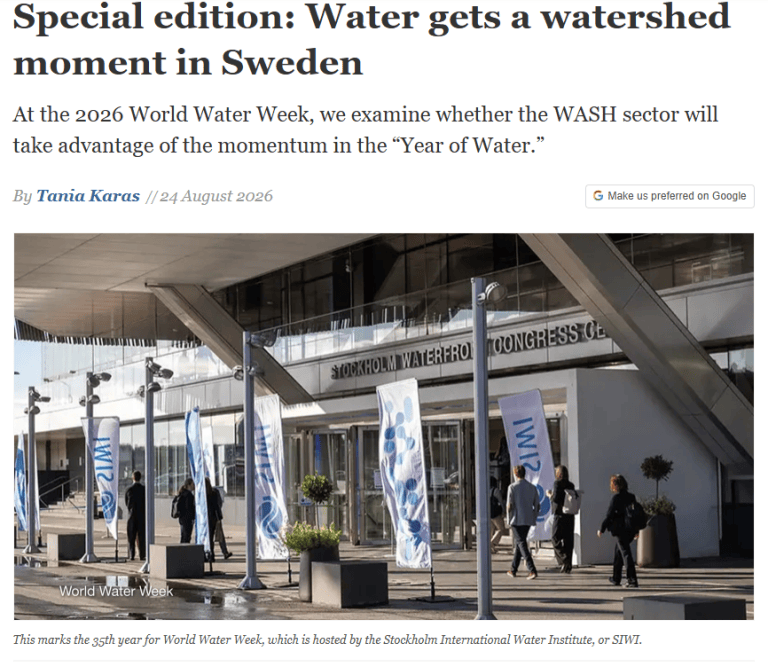
The water sector has been handed an unusually clean sequence this year. Stockholm meets from 23 to 27 August for World Water Week. Abu Dhabi convenes the UN Water Conference from 8 to 10 December, with investment sitting as a dedicated strand of the agenda rather than a side conversation. Roughly fifteen weeks separate the last big technical gathering from the moment governments negotiate. That interval is either the most useful thing to happen to water finance in a decade, or it is nothing at all, and the difference depends on what we decide to carry from one city to the other.
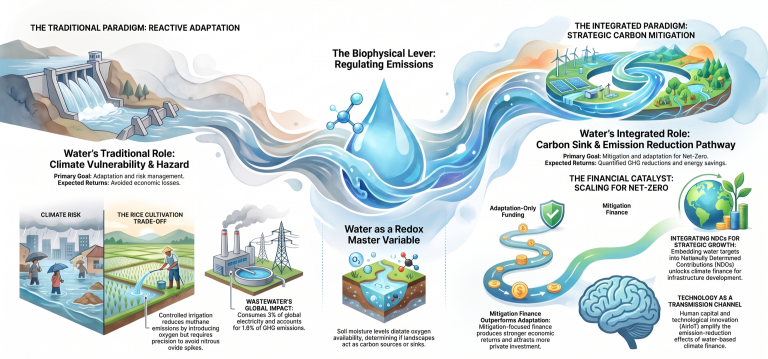
My argument is that we should carry three instruments and leave the headline numbers behind. They come from a single slide in this year’s preparatory material, headed The Mechanism: Innovative Climate Finance Models, with one instruction beneath it: move beyond standard municipal debt.
The first is parametric insurance and sovereign risk pools. The logic is unglamorous and, once you have watched a utility try to recover from a flood, obviously right. An objective climate metric, rainfall data being the usual example, triggers an instant liquidity payout. No months of physical damage assessment, no loss adjuster walking a treatment plant while the town goes without water. The money arrives because the trigger fired, not because a process concluded. Speed here is not a convenience. It is the difference between a utility that recovers and one that never quite does.
The second is currency and credit risk mitigation. This is the mechanism the sector discusses least and needs most. Commercial lending does not avoid green water infrastructure in emerging markets because the engineering is doubtful. It avoids it because currency volatility makes the arithmetic impossible. Specialised guarantees that absorb that volatility turn an unaffordable loan into an affordable one. Nothing about the underlying project changes. The price of money does.
The third is output-based aid combined with blended microfinance: community equity, local commercial loans and public guarantees synthesised into one structure, so that the risk-return profile of rural and municipal distribution systems becomes something a lender can actually hold. This is the mechanism that reaches where the other two rarely do, the last stretch of pipe, the small system, the district that never appears in a national investment plan.
Read together, these three do something that years of advocacy has not managed. They stop treating the finance gap as a shortage of goodwill and start treating it as a set of engineering problems in the capital structure. Liquidity arrives too slowly, so build a trigger. Currency risk makes lending unaffordable, so absorb it. Small systems cannot carry risk alone, so blend it. Each is a specific fix for a specific failure, which is exactly why each can be standardised and reused.
That word, standardised, is the whole argument, and it is why I want these instruments to become boring. At present, every one of them is assembled from scratch. A parametric trigger designed for one basin and never lifted to the next. A guarantee negotiated over many months for a single utility. A blended package that works in one district and dies when its champion moves on. The instruments are proven. What is missing is the willingness to make them ordinary, documented and repeatable, so that the tenth country to ask does not have to invent what the first one did.
So the two dates have distinct jobs. August is the technical milestone. Stockholm is the last place where practitioners can sit together and agree what a parametric trigger, a currency guarantee and a blended output-based structure should look like as standard products, with default terms, eligibility rules and documentation that travel. December is where governments decide whether those products become something a country can request rather than negotiate.
If the two are prepared separately, we already know the outcome. Stockholm produces a good consensus in a room, Abu Dhabi produces a pledge, and the utility waiting on a damage assessment after the next flood is no better off than it was this year. If they are prepared as one sequence, the sector arrives in December with three specified instruments and a single, unambiguous ask.
That ask is modest and, I think, achievable. Not a new number. Three mechanisms moved from innovative to routine. Moving beyond standard municipal debt was the instruction on the slide. Fifteen weeks is enough time to take it seriously.
#WaterSecurity #ClimateFinance #WorldWaterWeek #UN2026WaterConference #SDG6 #AdaptationFinance