Egypt placed water security within national sovereignty, describing the Nile as an existential interest and calling for cooperative transboundary governance. Pakistan used similarly forceful language on the Indus system, while Kazakhstan proposed an International Water Organisation under United Nations auspices. Nepal connected glacier retreat and increasingly unpredictable rivers with destructive floods and proposed a Himalayan Climate Resilience Mechanism. Tajikistan similarly placed glaciers and water security within international climate diplomacy, reinforcing the case for treating cryospheric change as a transboundary development and security concern. Water therefore entered UNGA 81 primarily through security, sovereignty and economic stability rather than as a discrete development sector.
African leaders emphasised the hydrological consequences of climate change. Namibia cited prolonged drought and floods in its call for sustainable climate finance. Mozambique linked repeated climate shocks with losses of lives, crops and infrastructure and sought stronger adaptation finance, early warning and resilient infrastructure. Malawi argued that cyclones and droughts were eroding development gains while increasing fiscal pressure, strengthening the case for highly concessional finance rather than additional debt.
Small island developing States connected water-related climate risks with territorial integrity. Tuvalu presented land elevation and reclamation as adaptation measures. The Bahamas defended continuity of statehood and maritime rights under sea level rise, while the Maldives treated rising seas as a national planning and security challenge. Tonga linked cyclones and floods with stronger Pacific-owned resilience financing mechanisms.
Finance exposed the clearest political divide. Saint Lucia framed climate finance through justice and responsibility. Samoa called for accessible finance and linked debt relief with resilience. Sao Tome and Principe sought predictable resources, stronger access to the Green Climate Fund and effective loss and damage financing. Jamaica demonstrated the value of catastrophe insurance and catastrophe bonds for immediate liquidity, although the scale of national losses also revealed the limits of risk transfer when climate shocks become macroeconomic events.
These positions provide little support for replacing public climate finance with private investment. Vulnerable countries consistently prioritised grants, concessional resources, debt sustainability and loss and damage support. Private capital mobilisation featured more prominently in interventions by United Nations leaders, the UAE and financial institutions. Secretary General António Guterres called for larger multilateral development banks that can provide affordable long-term finance while mobilising additional private capital.
The UAE engagements around UNGA 81 moved this discussion towards implementation. UAE convened governments, development finance institutions, banks, investors, technology companies, and humanitarian organisations to prepare for the 2026 United Nations Water Conference. Discussions connected political leadership with investment, humanitarian water security, technology and artificial intelligence.
The financing constraint remains substantial. More than 90 per cent of water finance currently comes from public budgets, while achieving SDG 6 requires investment exceeding US$1 trillion annually. UNEP estimates annual adaptation needs in developing countries at US$310 billion to US$365 billion by 2035, compared with approximately US$26 billion in international public adaptation finance in 2023.
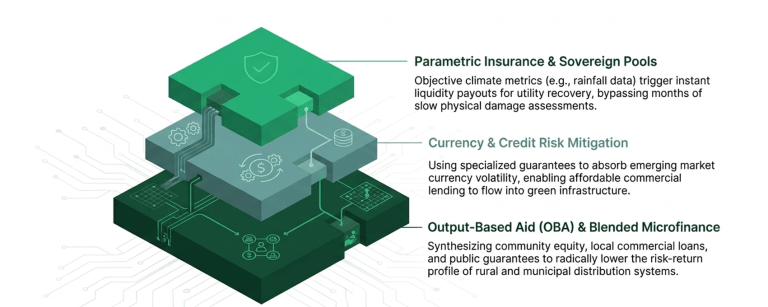
A credible paradigm shift therefore requires differentiated capital. Governments should translate adaptation plans, climate commitments and water strategies into investable resilience programmes. Public resources can finance climate information, institutional capacity and project preparation. Grants remain essential for public goods, fragile settings, ecosystem restoration and communities with limited ability to pay. Concessional debt can address affordability and maturity constraints, while guarantees and junior capital can absorb specific risks where commercial participation offers genuine additionality.
Private capital should enter selectively. Water efficiency, reuse systems and established utilities may offer credible revenue streams, whereas rural sanitation, watershed restoration, flood protection and humanitarian water services often cannot. Blended finance is therefore most useful for allocating specific risks rather than as a universal financing model.
The 2026 United Nations Water Conference could operationalise this approach through country-owned investment platforms and prepared pipelines that link climate rationale, affordability, safeguards, and measurable resilience outcomes. We need programmatic water resilience, stronger project preparation and financing instruments matched to specific barriers. Measure the paradigm shift through stronger institutions, affordable services, avoided losses, ecosystem resilience, and durable changes in investment behaviour, alongside capital mobilisation.