Category: Early Warning
-

SUMMARY REVIEW ON HYDROMETEOROLOGY GOOD PRACTICE AT THE INTERNATIONAL AND NATIONAL LEVEL – CASE OF VIETNAM
This report is a summary review on recommended practice, law and policy on hydro meteorological activities in the global context. The World Meteorological Organization, which is the international leader of the development of law and policy on hydrology and meteorology. They provide recommendations and suggest good practices through a manual and a guide for different…
-
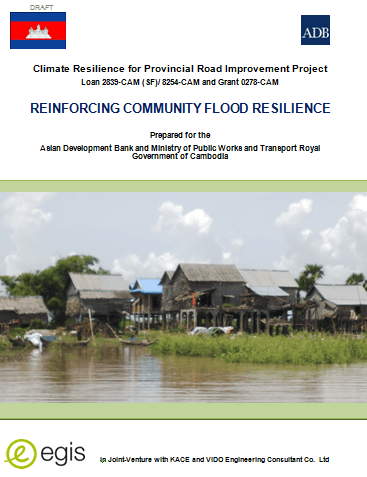
REINFORCING COMMUNITY FLOOD RESILIENCE FOR ROAD INFRASTRUCTURE
The Ministry of Public Works and Transportation (MPWT) is increasingly focusing its attention on extreme climate events and their impact on Cambodia’s road network. Under the ADB-funded “Climate Resilience for Provincial Road Improvement Project” (CR-PRIP), MPWT aims to promote climate adaptation and environmentally friendly roads. The project will ensure the robustness, safety, pass-ability, and durability…
-
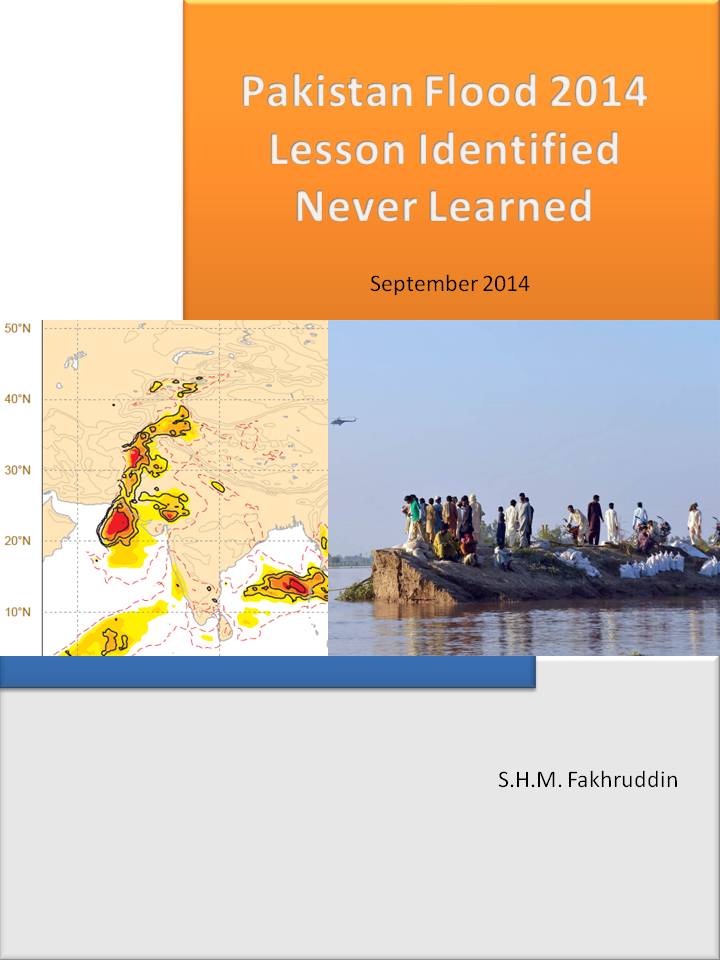
Pakistan Flood 2014- Lesson Identified Never Learned
I wrote similar article right after 2010 floods. I had a chance to work in Pakistan to conduct some climate risk management assessment and training program for the Government officials on climate risk management during 2009-2010. Based on my assessment, major recommendation was to strengthening flood forecasting and warning system with longer lead time and…
-
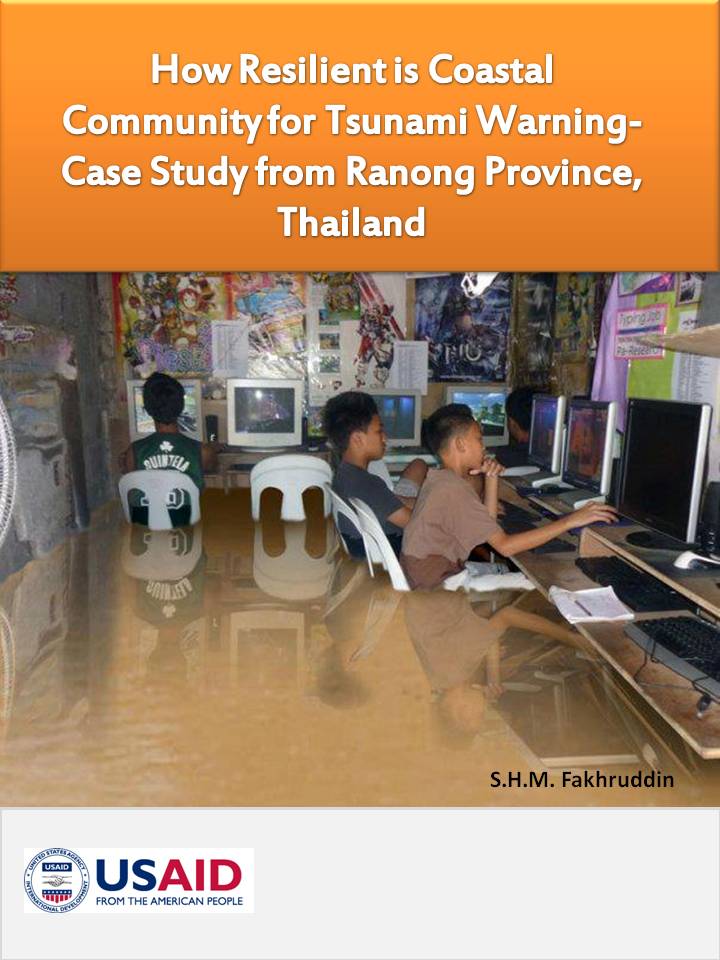
How Resilient is Coastal Community for Tsunami Warning- Case Study from Ranong Province, Thailand
Early warning system (EWS) is an integral part of human to influence perceptions, decisions and behaviour in times of adverse conditions and crises. Thus an early warning system integrated science, institutions and society for hazard detection to trigger warning, influences behavior for decision making and community response. People still EWS as their immediate warning and…
-
Applications of Medium Range Probabilistic Flood Forecast for Societal Benefits: Lessons Learnt from Bangladesh
It has long been recognized that if society could have advanced information on weather, the adverse effects associated with extreme weather could be minimized. The prevalence of traditional forecast practices in various parts of the world reflects the demand for long-range forecast schemes to manage uncertainties associated with it. Recent advancements in long-lead flood prediction…
-
How Resilient is Coastal Community for Tsunami Warning- Case Study from Ranong Province, Thailand
Early warning system (EWS) is an integral part of human to influence perceptions, decisions and behaviour in times of adverse conditions and crises. Thus an early warning system integrated science, institutions and society for hazard detection to trigger warning, influences behavior for decision making and community response. People still EWS as their immediate warning and…
-
Tsunami Alert Rapid Notification System (TARNS) for Thailand
The tremendous loss of life resulting from the December 26, 2004 tsunami emphasized the necessity of establishing and improving tsunami warning systems in countries of the Indian Ocean. While the Pacific Tsunami Warning Center (PTWC) in Hawaii notified officials in some countries about the probability of a tsunami generated by the Sumatra Earthquake, there were…
-

Strengthening Disaster Preparedness of Agricultural Sector in China
The “Strengthening Disaster Preparedness of Agricultural Sector in China (TCP 3105)” Project was funded by Food and Agricultural Organization (FAO) in Juye County Shandong Province being implemented from August 2007 to December 2009. The Chinese governmental counterpart institutions include: (i) Ministry of Agriculture (MOA) as national level counterpart; (ii) Shandong Provincial Department of Agriculture; (iii)…
 Bapon (SHM) Fakhruddin, PhD