Category: Early Warning
-
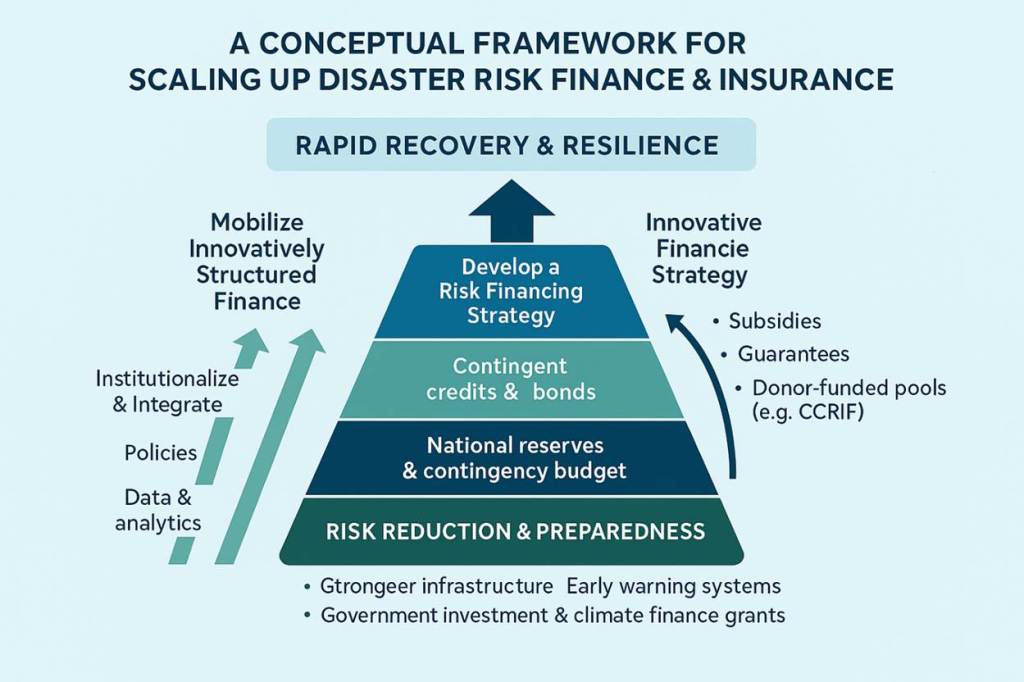
Empowering a resilient future through innovative climate financing
https://doi.org/10.5281/zenodo.18593780 Water and Climate Leader @ Green Climate Fund | Strategic Investment Partnerships and Co-Investments| Professor| EW4ALL| Board Member| Chair- CODATA TG February 5, 2026 Climate-related hazards are increasing in frequency and severity, threatening decades of development gains. Last year alone, extreme floods, storms, and droughts caused hundreds of billions in economic losses worldwide and…
-
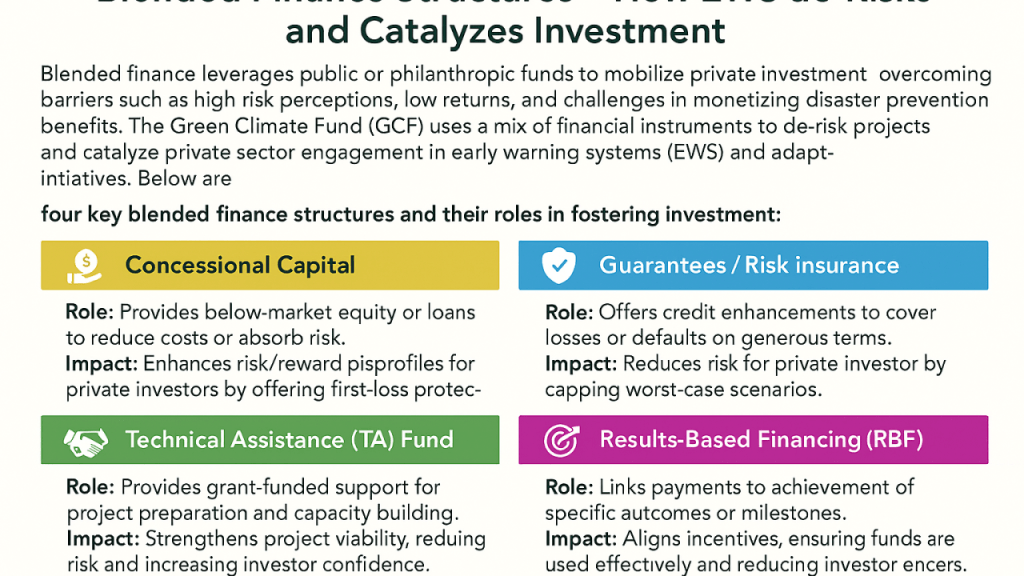
How EWS could De-Risk and Catalyse Investment
Given the scale of need (the EW4All initiative estimates $3.1 billion needed by 2027 to cover global EWS gaps), public finance alone won’t suffice. So far, most EWS projects are grants in the public sector. A potential growth area is innovative financing for EWS and early action for example, we could expand support for parametric…
-
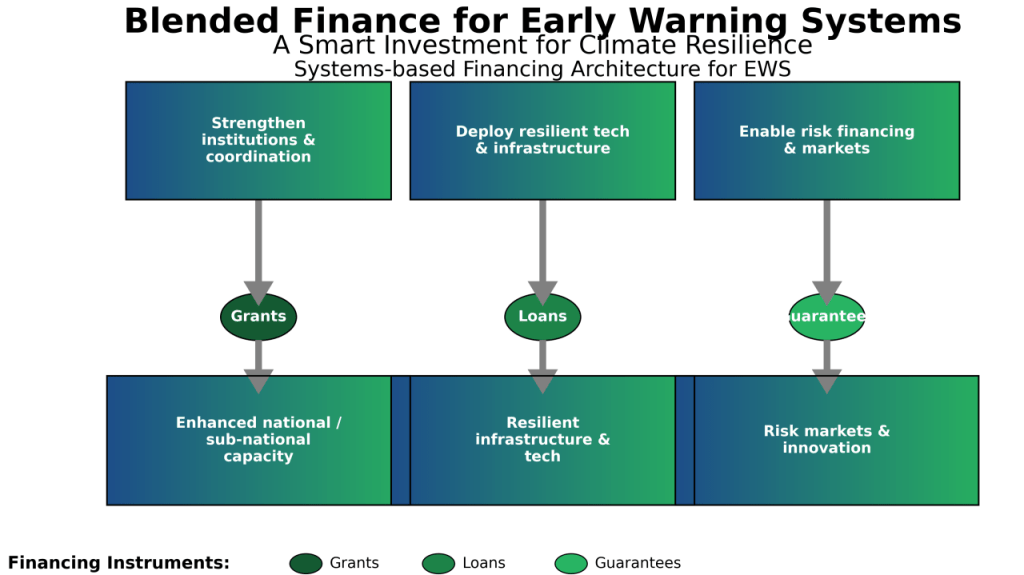
Blended Finance for Early Warning Systems: A Smart Investment for Climate Resilience
We are in an era of systemic, interconnected, and cascading climate risks. Tropical cyclones, floods, droughts, and heatwaves are intensifying in both frequency and severity. The cost of inaction is rising exponentially, and our current financing models are not keeping pace. This is a humanitarian crisis and fundamentally a market failure, manifesting as failures in…
-
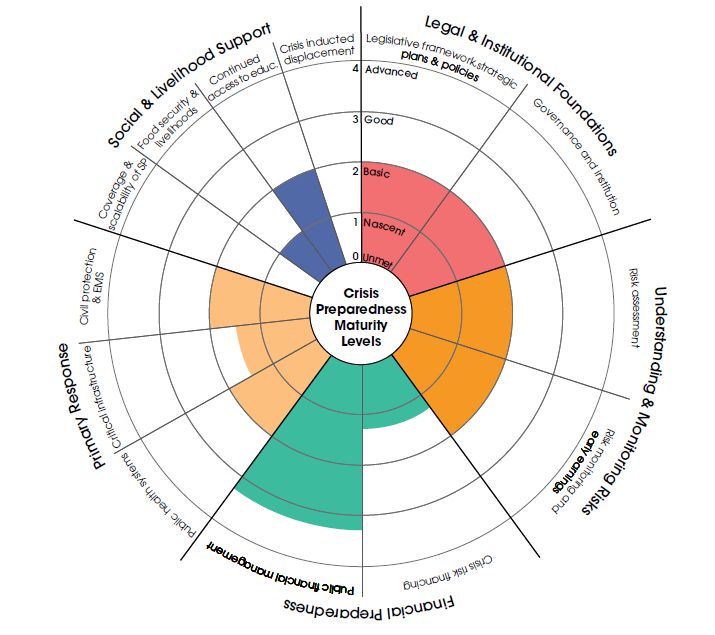
Strengthening Bhutan’s Crisis Preparedness for Climate and Disaster Resilience
The recent Crisis Preparedness Gap Analysis (CPGA) by The World Bank highlights the urgent need to address Bhutan’s vulnerabilities to crises, particularly its exposure to natural hazards, the impacts of climate change, fragile infrastructure, and emergent social challenges. Bhutan has made progress, including enacting the Disaster Management Act of 2013, but there remains a pressing…
-
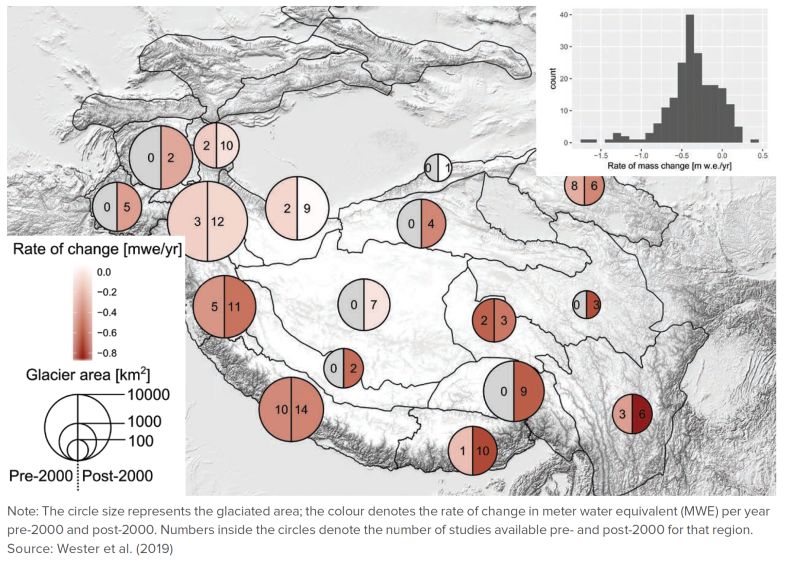
Climate Change Impacts on the Third Pole and Himalayan Glaciers
It’s been a pleasure to come to Bhutan and talk about the rapid melting of glaciers in the Third Pole region. This area, containing Earth’s third-largest storage of frozen water after Antarctica and the Arctic, is experiencing unprecedented changes that threaten the lives and livelihoods of billions. – The Third Pole’s glaciers cover approximately 100,000…
-

Water at the Heart of Climate Adaptation
The critical role of water in climate adaptation again strongly highlighted the findings of the World Meteorological Organization “State of Climate Services” report. The progress made in developing climate services, particularly in vulnerable regions, while stressing the urgent need for further investment and capacity building. The interconnectedness of water, climate, and human livelihoods is emphasized,…
-
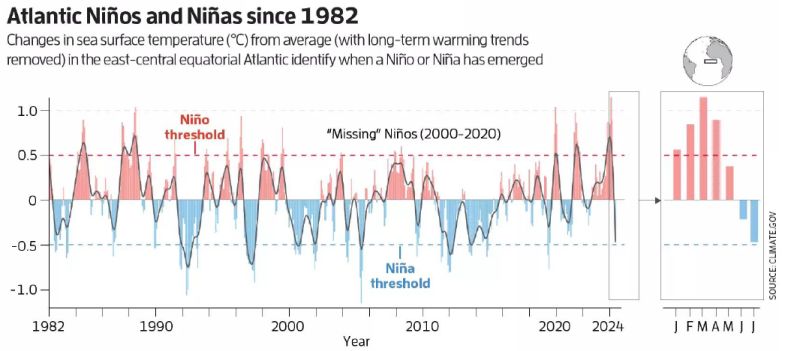
Emerging Atlantic Nina and La Niña: Implications for Global Climate Patterns
We have observed a rapid cooling in the equatorial Atlantic Ocean in the past three months. This is happening at a record speed. This emerging “Atlantic Nina” pattern and an expected La Nina in the Pacific Ocean present a complex interaction of climate forces that could have far-reaching impacts on weather patterns worldwide. According to…
-
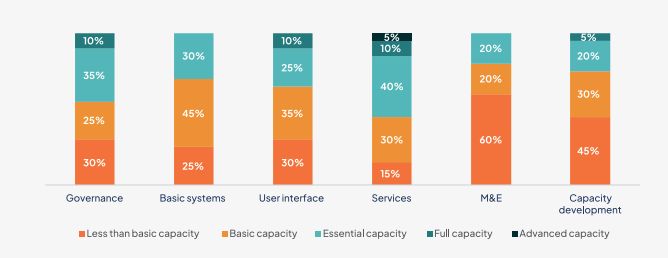
Strengthening Early Warning Systems for Global Climate Resilience
The Hydromet Gap Report 2024, produced by the Alliance for Hydromet Development, summarized critical gaps we must urgently address. It reveals that many NMHS in the developing world face severe resource constraints, knowledge gaps, outdated infrastructure, and limited data sharing – hampering their ability to deliver the early warnings and climate services communities need. For…
-
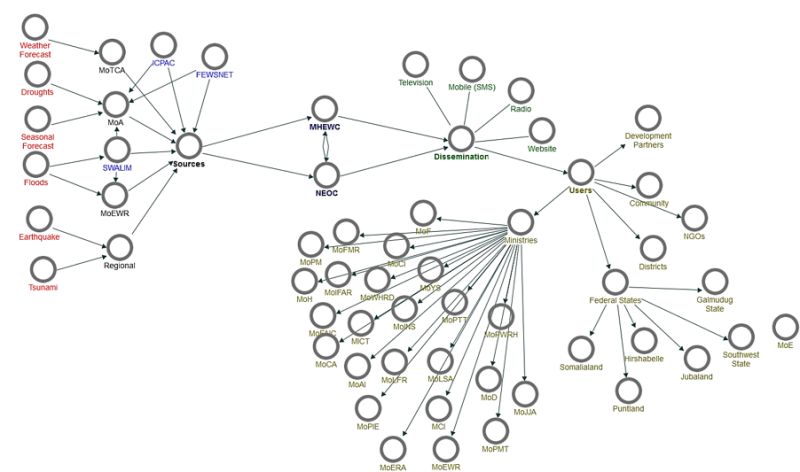
A Decade of Building Climate Resilience in Somalia Through Early Warning Systems
Reflecting on my engagement in Somalia over the past decade, it’s been a profoundly transformative journey. My involvement began with supporting the establishment of their hydrometeorological working group, which was a foundational step towards enhancing the nation’s capacity to understand and respond to climate variability. The subsequent development of a multi-hazard early warning centre marked…
-
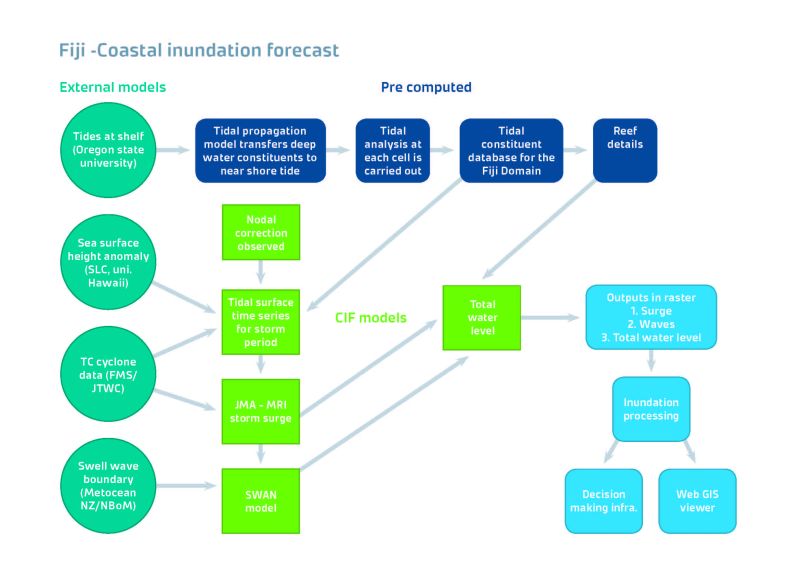
The Brown Ocean Effect: How Warm, Wet Land Is Re-Energizing Cyclones
Cyclones typically lose power once they move over land. However, new research shows that if the storm passes over warm, soaked ground, the moisture and heat from the soil can re-energize the hurricane. This mimics the way that the warm ocean usually fuels the storms. As climate change increases extreme weather events, understanding this phenomenon…
 Bapon (SHM) Fakhruddin, PhD