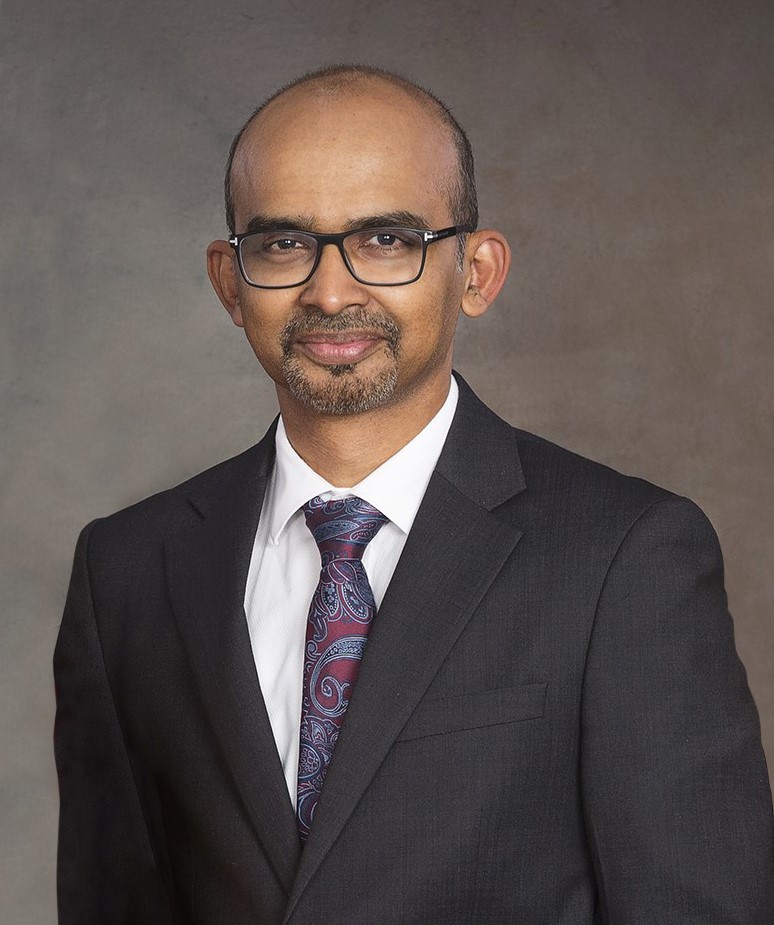
Dr. Fakhruddin is a leading expert on climate resilience. He has over 23 years of experience advising governments and organizations around the world on disaster risk reduction and climate change adaptation. As a hydrometeorologist, his specialty is in climate risk assessment, early warning systems, community resilience, and water security.
Dr. Fakhruddin is currently leading the Water Sector at the Green Climate Fund. He oversees climate investments in vulnerable countries around the world to support water security and early warning project origination. He serves on international expert committees, Chair, Board Member and Professor such as the International Science Council, CODATA, Earth GEO, WMO, and lends his expertise to advance national resilience agendas for governments in LDCs and SIDS.
A thought leader in climate finance, Dr. Fakhruddin has designed pioneering financial instruments, co-investment platforms, and global initiatives on water and climate resilience. His expertise in structured finance—including concessional loans, equity, and debt swaps—has enhanced private sector engagement and climate resilience in vulnerable regions, including Small Island Developing States (SIDS) and conflict-affected areas like South Sudan and Haiti. He played a pivotal role in GCF’s replenishment efforts and the development of the water security vision, aligning global climate priorities. His leadership extends to high-level advocacy at forums like COP, UN Water, and the One Water Summit, where he advances evidence-based policies and inclusive development.
With a PhD in Water Engineering from POLIMI and MIT and a Harvard Business School diploma in Sustainable Finance, Dr. Fakhruddin combines technical acumen with strategic financial innovation. His career highlights include developing early warning systems (e.g., Indian Ocean Tsunami Warning System), national climate risk assessments (New Zealand, Pacific Islands), and resilience frameworks for critical infrastructure. He has authored numerous publications (h-index 24). Fluent in English and adept in high-stakes diplomacy, Dr. Fakhruddin bridges science, policy, and finance to safeguard vulnerable communities against climate threats while fostering sustainable development.
- Strategic climate and disaster finance leadership: 25+ years leading multi-sector climate and disaster risk finance initiatives across Asia-Pacific, Africa, and Caribbean, driving high-impact solutions from project appraisal to on-the-ground implementation.
- Portfolio & program management: Led multi-year, multi-billion-dollar blended finance portfolios >$10 billion) including origination and appraisal of $7B+ GCF climate investment portfolio with rigorous performance monitoring and agile adaptation to achieve results under volatile conditions.
- Financial instruments & market innovation: Structured innovative and fit for purpose financial instruments (blended finance, guarantees, parametric insurance, catastrophe bonds) to mobilize private capital for resilience projects. Pioneered public-private risk pooling initiatives and pre-arranged financing mechanisms to ensure rapid response to disasters.
- Policy Influence & Public Discourse: Influenced climate and energy policy in key geographies. Advised governments in Asia and EMDEs (e.g., developed New Zealand’s national Climate Risk Assessment framework) and contributed to multilateral climate forums (UNFCCC, G20) to shape global climate agendas. Skilled in strategic communications — led public engagement campaigns and narrative shifts to build support for climate action.
- Ecosystem Building & Stakeholder Engagement: Built and coordinated strong coalitions of stakeholders, including governments, multilateral banks, NGOs, and private sector partners. Strengthened climate action ecosystems through capacity building, convening strategic partnerships, and mentoring local leaders. Designed Save the Children’s first children’s education & climate resilience program (BRACE) across Tonga, Sudan, and Cambodia, demonstrating an entrepreneurial approach to integrated solutions benefiting vulnerable communities.
- Team Development & Inclusive Leadership: 10+ years in senior management roles leading cross-functional teams on multiple continents. Adept at inspiring high performance, fostering a culture of curiosity and continuous learning, and championing staff wellbeing. Experienced in matrix management and coaching, with a commitment to diversity, equity, and CIFF’s values of openness and collaboration.
- Global Perspective & Communication: Fluent in English; extensive experience working across cultural contexts in Africa, Asia, and Europe. Excellent communicator and presenter, able to represent organizations in high-level forums, board meetings, and media engagements. Authentic, mission-driven leader with the humility and resilience to drive change in complex environments.
Key Skills:
Strategic
Bapon’s strategic capability in climate and disaster investment is evident through his coordination with public and private sector engagement, identifying and executing co-investments (e,g, IMF, IDB, GPE). He knows how to develop and structure opportunities to ensure they meet the fund’s strategic goals and the climate needs of the beneficiary countries. For example, he designed the GCF’s warning for All with UNDP, WMO, UNDRR, ITU and IFRC; the BRACE education project with GPE; and water investment facilities with IFC.
Financial Innovation. In terms of financial innovation, Bapon has led the structuring of novel financial instruments to attract co-investors, AEs and DAEs of the GCF using various financial instrument grant, concessional loans, equity, guarantor, insurance, etc. For example, designing major water projects with innovative finance using highly concessional loans, guarantor, equity and debt swap together with IDB, DBSA South Africa, CRDB in Tanzania, and other countries. As a thought leader he is well respected in the region, contributing to the replenishment of GCF-2 and developing scalable catalytic facilities, which are central to mobilising additional capital for climate programs.
Collaborative leadership. Bapon’s collaborative approach has recently been demonstrated by his GCF and his previous work with the New Zealand Prime Minister’s Office where he closely builds and maintains relationships with internal and external stakeholders across the climate finance spectrum and diplomatic relationships. Other examples are:
- Built strong relationships with internal and external stakeholders and investment teams for all Pacific and CARICOM Governments, NZ’s Ministry of Civil Defence, and government of Vietnam, Thailand, Sri Lanka, Indonesia, etc. on their climate risk assessment, hydro-meteorological practices and tsunami early warning systems.
- Under the GCF, he oversaw innovative water projects and the formulation of the 50by30 vision, reflecting a strategic perspective aligned with accelerating climate action.
Expertise
Bapon’s expertise in combining the strengths and knowledge of different partners is evidenced by his forming and overseeing strategic planning and advisory roles with UN agencies and multilateral development banks, including the UNDRR, WMO and ADB.
He also leads the Water Sector at the GCF where he oversees climate investments globally. This demonstrates expertise in sharing risks and rewards, making climate investments more attractive to both public and private investors through collaborative efforts. Examples of his work include involvement in the design and development of economy-wide integration of climate change adaptation and water-related disaster risk management in Samoa. This underlines Bapon’s deep investment experience and strategic skills essential for high-level representation.
Bapon also brings skills in scalability and replication of climate investments – as mentioned. These initiatives have encouraged wider adoption of successful co-investment models, expanding the reach of climate finance to the most vulnerable.
His pursuit of scalable climate investment models is also evidenced by his work in implementing the 50by30 vision for water security. By leading project evaluations and development strategic frameworks for organizations such as ADB, UNDP, and WMO, Bapon has been instrumental in replicating successful climate resilience initiatives. His championing of GCF’s perspectives in financial architectural reforms has also facilitated the provision of capital for climate investments.
His advisory roles and participation in international expert committees, such as the International Science Council and CODATA and UN families (i.e. Board member of GEO, WMO, UNDRR) reflect his advocacy for evidence-based planning and inclusive development – also crucial for facilitating reforms in climate investment financial architectures.
Delivery
From decades working in the private sector where time and cost pressures require operational effectiveness, Bapon’s ability to design innovative financial instruments and direct large-scale programs, and mobilize funds has directly achieved objectives related to climate resilience, water security, disaster risk reduction and economic sustainability across vulnerable regions.
For example, he has demonstrated organizational effectiveness by streamlining operations and reducing costs at the Department of the Prime Minister and Cabinet in NZ, developing a national disaster loss database and leading national climate risk assessment. This has enhanced the operational efficiency of climate and disaster risk reduction strategies, creating a systematic approach for risk comparison.
This initiative improved decision-making processes and has saved costs through focus on pre-emptive risk assessment. He provided similar expertise and outcomes for Tonga, Tuvalu, Niue, Vanuatu and Samoa and CARICOM countries, streamlining their climate vulnerability assessments operations to reduce costs of risk mitigation.
In terms of strategic delivery, Bapon’s leadership at GCF is marked by his successful oversight of water resource investments that align with the 50by30 strategy, focusing on water security and detection systems. He has guided development and approval of innovative water projects, highlighting his capacity to execute planned initiatives and deploy capital effectively to achieve GCF’s strategic objectives.
On the innovation front, Bapon’s work with the Asian Development Bank and contribution to climate risk and vulnerability assessments has promoted not only investment in forecasting models and resilience frameworks but has helped nations prepare for international development challenges. These are highly relevant to the GCF’s aims. Other innovations include Bapon’s designing of co-investment platforms and global projects on water, education and early warning systems for the GCF in his current role.
He has also effectively handled change management for new processes, building organizational buy-in. As Board member of Earth GEO and other organizations, he provides timely, comprehensive reporting to international Boards along with leading the delivery of approved investments. Bapon’s combination of strategic vision as well as operational excellence distinguishes him as a candidate.
Competencies
Bapon is equipped with a PhD in Water Engineering and Management, as well as diploma in Sustainable Investing from Harvard Business School. This has underpinned his work in formulating and articulating the 50by30 plan and vision for the water sector. His exceptional communication skills – he is a certified emergency management trainer familiar with working in emergency conditions – has delivered incident command systems across many countries (70+ major projects in total so far), bringing together internal and external stakeholders, investors government and non-government organizations together.
His work with the ADB and WMO to secure investments for climate projects has also enhanced his tact and discretion in managing complex political and high stakes environments.
Bapon encourages and embraces innovation, able to adapt to changing circumstances and trends. For example, his development of a flood and tsunami warning system for Fiji, underpinned by financial assessments for climate resilience, demonstrates his broad knowledge of climate investments and relevant financial instruments, particularly in structured finance.
This global outreach has not only enhanced stakeholder engagement and satisfaction but solidified Bapon’s reputation at the forefront of operationalising climate justice and safeguarding livelihoods against disaster risks.
Requirements & Technical Competencies
Bapon’s educational and professional credentials align with the job requirements. His qualifications include a PhD in water engineering, a Diploma in Sustainable Investing, Post Grad Diploma in integrated water resource management as well as a BSc in Civil Engineering. As a hydrometeorologist, his specialty is in climate risk assessment, community resilience, and water security.
In addition to membership on various boards, his 20+ years of relevant experience include senior management level involvement working in syndication with major global public and private financial and international institutions such as the GCF, ADB,GEF UNDP, World Bank, USAID, and AFD on project origination, appraisal and successful project delivery on climate and disaster risk reduction.
His work with the UNDP across Thailand, Nepal, Vietnam, Seychelles, Marshall Islands, and Samoa involved evaluating water resources projects’ performance, showcasing deep knowledge of developing country investment environments. He also led the midterm review and updating of the Cook Islands National Infrastructure Investment Plan for the Asian Development Bank (ADB), which reflects his familiarity with multilateral financial institutions and their operational frameworks.
Bapon’s extensive knowledge of climate investments and the financial instruments involved emphasise his skills in structured finance. His track record in leading and managing complex these financial transactions is well-documented.
Dr. Fakhruddin is also a thought leader in his field with dozens of publications in climate and water resilience and risk behind him. He serves on international expert committees, such as the International Science Council, Board member of UN Organizations, and lends his expertise to advance national resilience agendas for governments in Least Developing Countries and Small Island Developing States.
Bapon’s fluency in English is excellent and he has published numerous strategic climate publications and presentations in his career so far (full list available on request).
Engagement
Bapon has excelled as the Senior Water Specialist at GCF, where he has been the face of the organization in various regions. This role involved identifying regional needs and opportunities for climate finance, building and managing relationships with critical stakeholders, and overseeing the engagement and execution of GCF investments in coordination with national designated authorities and accredited entities.
GCF’s investment strategy and driving investment activities that align with GCF’s strategies and policies. His work in project origination aligns with the water sector global strategy for 2030.
To advance country-led programming ambitions, Bapon’s efforts consistently align with country-led programming ambitions, ensuring strategies resonate with national climate priorities. For example, he initiated co-design and co-creation of projects based on country needs, and his strategic involvement was pivotal in re-engaging Australia with the GCF Board. This facilitated a partnership that leveraged over $50 million in contributions and strong support from the Pacific communities.
His capability in managing high-level relationships and driving forward the fund’s objectives will benefit this role.
In representing the GCF in relevant events, Bapon has represented GCF and international climate organizations at high-level events, including the replenishment years in the Pacific and other international events like UN Water, COP28.
Communicating GCF’s mission and activities will be vital to this role. Bapon’s extensive representation of GCF in the region, communicating its mission, objectives and activities to various stakeholders, from government to civil society and the private sector, evidence his skills in this area.
As part of the GCF Task Force on complementary and coherence for other climate finances, Bapon has worked to ensure and promote transparency and accountability in climate funding activities, coordinating with other donors for integrated solutions and co-financing.
Origination
Bapon has been integral in managing origination pipelines, overseeing appraisal frameworks, and processes to ensure the effective allocation and management of resources within key climate funds, such as the Green Climate Fund, Asian Development Bank and the World Bank. His experience spans over 20 years, where he has offered substantive technical expertise and supervision, ensuring all GCF result areas are supported and advanced efficiently and effectively.
In his leadership roles, Bapon has not only supervised multiple project leaders and teams but also provided critical guidance on strategic, methodological, and technical matters. His expertise encompasses a broad spectrum of sectors, including water security, and climate change adaptation, where has evaluated over 200 projects.
By routinely engaging in mid-term and terminal evaluations for organizations like GEF, ADB, and the UN, Bapon has consistently incorporated lessons learned into new project origination and design, fortifying the teams’ ability to fine-tune project approaches that align with the overarching objectives of the GCF.
Portfolio Management
Bapon has led the charge in implementing and managing extensive climate change portfolios, leveraging his experience to navigate through the intricacies of infrastructure, climate adaptation, early warning systems, disaster risk reduction initiatives, and their associated political and investment environments. His strategic oversight extends across 40 countries, where he has enacted rigorous assessment protocols to evaluate investment performance and risks. For example, his pivotal role in designing the Indian Ocean Tsunami Warning System, and investment framework, has helped provide critical disaster preparedness in 28 countries.
Serving as a trusted advisor to governments and UN entities, Bapon has been instrumental in providing technical guidance on investment of $5 billion USD portfolios, underpinning their design and execution with robust project design, risk registers, and evaluative mechanisms. His contributions are geared towards improving outcomes, tackling implementation challenges, and managing risks proactively. This approach ensures agility in portfolio management, allowing for evidence-based decisions that steer projects towards their intended impact.
Track Record
Green Climate Fund (GCF) (Nov 2022- Till date)
- Provides leadership and oversight of the portfolio of investments in water resources for addressing climate change.
- Designed several co-investment platform and global projects on water, education and early warning system.
- Co-designed the BRACE (Building Resilient & Accessible Child Education) programme with Save the Children and GPE – an innovative multi-country initiative integrating climate resilience into education systems in Tonga, Sudan, and Cambodia.
- Contributed replenishment of GCF-2, external relationship and NAP contributions for UNFCCC together with DEA and OGA colleagues
- Leads the development of strategy, policy, technical documents and tools focused on water development and investment and assessment aligned towards adaptation, mitigation and overall country/sectoral programming strategies.
- Oversees sectoral pipeline, designed and approved several innovative water projects and portfolio performance to ensure investment targets are met
- Advocates with DMA colleagues and GCF Program Leadership on water resource planning, management and development approaches, relevant methodologies, and country needs
- Negotiates with external stakeholders as they access the Fund’s investment resources (including scalable catalytic facilities), and provide technical advice on water resources-related activities in line with GCF objectives.
- Contributed thought leadership in water security and laid out 50by30 plan for water sector.
Department of the Prime Minister and Cabinet, New Zealand (Mar 2018- Aug 2019)
- Develop national climate change risk assessment framework (the framework) that enables a broad range of risks to be systematically compared.
- Develop national disaster loss database for Sendai Framework for DRR
- Advisory role/panel member for national climate risk assessment
Tonkin and Taylor Ltd, Auckland, New Zealand
(2015 – to Oct 2022)
- Midterm Review and Updating of Cook Islands National Infrastructure Investment Plan 2015 for Asian Development Bank (ADB)
- Collaboration with National Disaster Management Authority and Met Services to assist in program design for climate vulnerability assessments and disaster risk reduction for water induced hazards in New Zealand and Pacific countries (Vanuatu, Samoa, Niue, Tuvalu, Solomon Islands and Tonga) using global, regional and national databases.
- Climate and disaster risk assessment for Port Vila, Vanuatu, Urban Development project of Asian Development Bank
- Development of a national strategic plan and framework for weather and climate services with complementary action plan in Kiribati under WMO.
- Development of the flood warning and response system for Greater Wellington Regional Council, New Zealand.
- Development of a flood and tsunami early warning system for Fiji. Conducted probabilistic tsunami hazard assessment for Fiji and other Pacific Islands.
- Application of big data and earth observation data for pre-impact, planning and rapid disaster mapping for water-induced hazards (i.e., Kaikoura earthquake, Solomon Islands floods; cyclones affecting Fiji, Tonga, Samoa and Bangladesh).
- Hydrological assessment and probabilistic flood forecasting and warning system for Waikato region, New Zealand, Honiara river, Solomon Islands, Vaisigano River, Samoa.
- Project evaluations and monitoring framework on climate resilience and disaster risk reduction for ADB, WB, USAID, AFD, and UNDP GEF in the Asia and Pacific.
- Vulnerability assessment and adaptation planning for road transport master plan 2030 in Cambodia for UNDP and Ministry of Environment and Forestry.
- Developed flood risk assessment for climate change in Honiara, Solomon Islands.
- Developed integrated water management plan (IWRM/IWMP) for Samoa linking to coastal and climate change plan.
- Development of multi-hazards impact based early warning system for Commonwealth of Dominica.
- Development of community-based flood resilience under the ‘Flood Resilience Alliance Project’ of New Zealand Red Cross.
- Development of National Loss Database for hazard risk assessment and reporting to the United Nations’ Sendai Framework under the Ministry of Civil Defence, NZ.
- Cost-benefits of the early warning system and system design for multi-hazard earning system in the Pacific and Asia (e.g., Samoa, Tonga, Solomon Islands, Vanuatu, Kiribati, Thailand, Sri Lanka, Indonesia, Bangladesh, Nepal, Dominica, Seychelles, etc.).
- Disaster impact modelling for the world largest refugee camp (i.e., the Rohingya community). Conducted monte carlo modelling of tropical cyclones in the Bay of Bengal.
- Natural hazard risk assessment and their potential impacts on critical infrastructure (e.g., Ports Collective, roads, buildings) in New Zealand, Asia and the Pacific.
- Multi-hazard coastal risk assessment for Hawke’s Bay coastal hazard strategy to 2120 in New Zealand.
- System developer for multi-hazard impact-based early warning system for Tonga and Samoa under World Bank.
- Conducted climate/drought risk assessment and development strategies for utilization of groundwater and surface water in in Bangladesh under Swiss Red Cross.
United Nations Development Programme (UNDP) (2013-2016), Thailand, Nepal, Vietnam, Seychelles, Marshall Islands and Samoa
- Review hydro-meteorological practices, law and policy for the Government of Vietnam. Establishment of location-specific early warning system for the Red River basin in Vietnam
- Evaluation of water resources projects performance under Pacific Adaptation to Climate Change (PACC) project to reduce vulnerability and/or to increase adaptive capacity to the adverse effects of climate change in Marshall Islands, Nauru, Niue, Tonga, Tokelau and Tuvalu
- Design and development of economy-wide integration of climate change adaptation and water-related disaster risk management to reduce climate vulnerability of communities in Samoa using a ridge to reef approach.
- Terminal evaluation for the glacier lake outburst project for UNDP Nepal
- Designed an end-to-end multi-hazard early warning system and command centre operations for the Seychelle Islands. Developed and tested warning dissemination and notification procedures from national to local level.
- Developed and trained climate risk assessment for Climate Risk Management Technical Assistance Support Project”, Armenia, Bangladesh, Bhutan, India, Maldives, Mongolia, Mozambique, Nepal, Pakistan, Papua New Guinea, and Timor-Leste
Asian Development Bank (ADB) (2014-2015)
- ADB TA: Climate risk and vulnerability assessment and development of early warning system for Cambodia and Urban disaster risk assessment for Tonga.
- ADB TA: Adapting to Climate Change through Integrated Water Resources Management in Bhutan to develop hydro-meteorological data projections based on the latest climate change scenarios and undertaking statistical downscaling to project local conditions.
World Meteorological Organization (WMO), Switzerland (2013-2014)
- System design and guidance for developing a coastal inundation forecasting model for Bangladesh, Fiji and Dominican Republic. Developed inundation scheme for the coastal inundation model by integrating cyclone, storm surge, wave and hydrodynamic models.
- EU-FP7 supported project “RISC-KIT” to develop a case study in Bangladesh on coastal inundation modelling. Configuration of basic functionality inFEWS for storm surge and flood modelling. Training and capacity building on Delft-FEWS software
Regional Integrated Multi-Hazard Early Warning System (RIMES), Thailand (2010-2013)
- USAID funded “Nobo Jiban” program of Save the Children to enhance cyclone risk management in Bangladesh.
- Decision Support System for coastal hazard early Warning System – Vietnam, China, Bangladesh, and Maldives: Team Leader
- USAID funded “SHOUHARDO-II” program of CARE Bangladesh to develop ensembles probabilistic long lead flood forecasting technology, Team Leader- Hydrology
Asian Disaster Preparedness Center (ADPC), Thailand (2007-2010)
- Post disaster needs assessment for Cyclone Nargis in Myanmar and Cyclone SIDR in Bangladesh. Delivered enhanced cyclone early warning system.
- USAID funded ‘Climate Forecast Applications’ in Philippines and Indonesia- developed interpretation methods of seasonal climate forecasts for agriculture risk management and trained farmers groups on climate risk management.
- IFRC funded ‘Community based early warning and national disaster management project’ in Sri Lanka. Conducted evaluation of projects achievements and future recommendations for Sri Lankan Red Cross.
- DANIDA funded ‘Support to Strengthening National Capacity for Flood Risk Reduction and Adaptation to Climate Change Project in Nepal’- Developed flood forecasting model and flood inundation scenarios using 1d and 2d MIKE series modelling.
- Development of analytical framework for IWRM, Bangladesh
USAID, Thailand (2005-2007)
- USAID Indian Ocean Tsunami Warning System (US IOTWS) Program, Indonesia, Thailand, Sri Lanka and Maldives (2005-2007)
- Worked with United States Department of Agriculture, Forest Service (USFS) as a lead trainer and technical specialist to implement Incident Command System (ICS) for the disaster response management in Sri Lanka, Indonesia and Thailand
- Worked with National Oceanographic and Atmospheric Administration (NOAA) and USFS as an emergency communication specialist to develop the tsunami alert rapid notification system to enhance early warning dissemination network, development of protocols, procedures for Thailand and Indonesia.
Education
- PhD, Water Engineering & Management, Politecnico di Milano, Italy (2013-2016)
- Diploma in Education, Sustainable Investing, Harvard Business School (2022-2023)
- PGradDip, Integrated Water Resource Management, United Nations University, Canada
- MSc, Water and Engineering Management, 2012, Asian Institute of Technology, Thailand
- BSc, Civil Engineering, 2002, Khulna University of Engineering and Technology, Bangladesh
Qualifications/Memberships
- MPENZ, Engineering New Zealand/ID-1026045
- Member, New Zealand Hydrological Society (NZHS)
- Member, New Zealand Coastal Society (NZCS)
- Board Member, Group of Earth Observation (GEO) (2021- 2025)
- Chair for the Disaster Loss DATA and Risk Interpretation and Applications (RIA) Working Group of IRDR of ISC/UNDRR
- Chair of the CODATA task group FAIR Data for DRR
Publications
h-index-24, i10-ndex 40 (as of Jan 2025)
Citation- Around 2,500
For more information contact Bapon Fakhruddin: bfakhruddin@gcfund.org
 Bapon (SHM) Fakhruddin, PhD