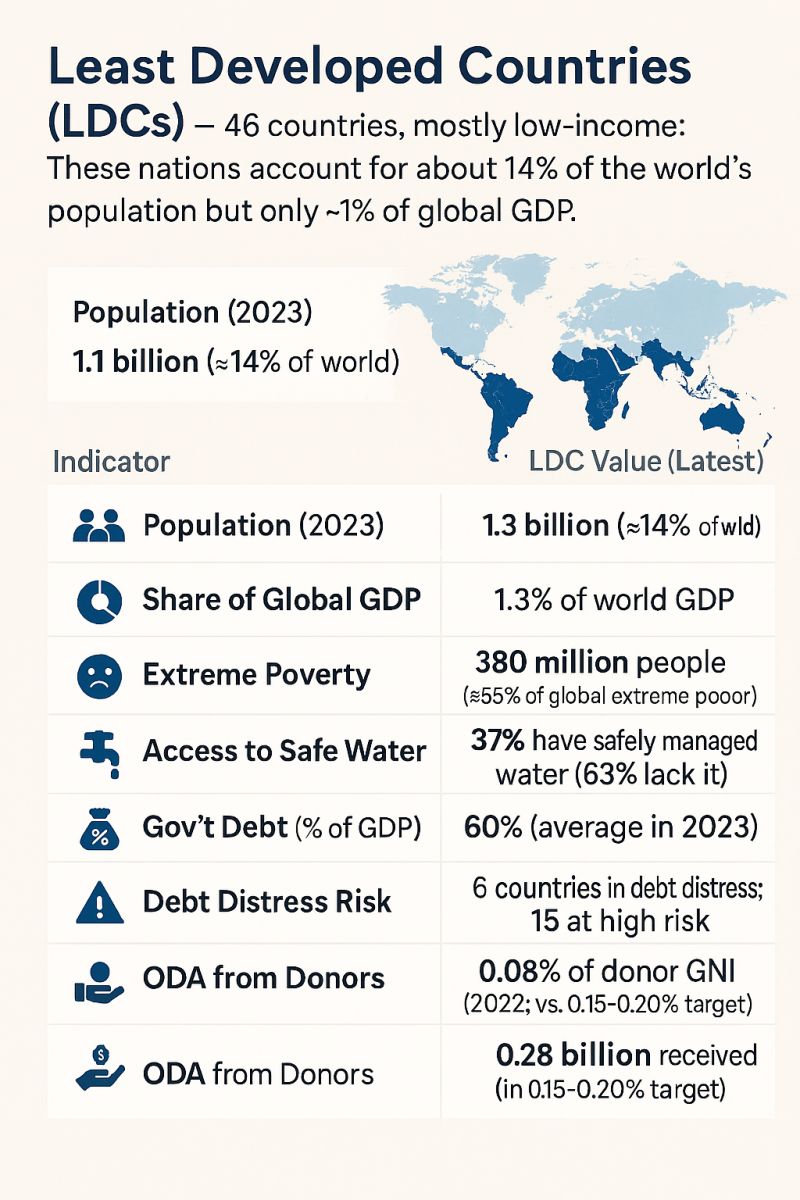
LDCs and SIDS face a dual crisis of high debt and underinvestment in water infrastructure. Only 37% of LDC residents have access to safely managed drinking water, reflecting a huge infrastructure gap. Government debt in LDCs has climbed to roughly 60% of GDP on average (2023), up from 41% a decade ago. As of late 2023, 6 LDCs are already in debt distress and 15 more at high risk, meaning nearly half of all LDCs struggle with unsustainable debt. Many are spending a growing share of revenues on servicing loans instead of on public services. These shocks force countries to borrow more at high interest rates, creating a vicious cycle of debt and underinvestment. With limited access to capital markets and most SIDS ineligible for regular concessional loans (due to their middle-income status), both LDCs and SIDS face severe constraints in financing water and sanitation projects from domestic resources alone.
Bridging the water investment gap in these vulnerable countries requires blended finance with high concessionality. To achieve universal water access (SDG 6) by 2030, annual investment needs are estimated at around $100–150 billion globally, a figure far higher than current spending levels. LDCs and SIDS, in particular, cannot meet such needs without external support: for example, in 2023, the 59 most debt-vulnerable developing countries (many of them LDCs or SIDS) spent on average 15.5% of government revenue on external debt payments, the highest in decades, leaving little fiscal space for infrastructure. Traditional grants and loans aren’t sufficient; innovative blended finance structures are needed to combine public, private, and philanthropic funds. Concessional finance, grants, and low-interest, long-term loans are the key ingredients that make these blends work by reducing risk and easing the debt burden. Concessionality ensures that critical water projects (e.g., climate-resilient water supply, sanitation systems, or desalination and reuse facilities) in SIDS can proceed without pushing countries into deeper debt.
#LDCs #SIDS #WaterSecurity #SDG6 #BlendedFinance #ConcessionalFinance #DebtDistress #ClimateVulnerability #ClimateResilience #DevelopmentFinance #LeaveNoOneBehind

 Bapon (SHM) Fakhruddin, PhD