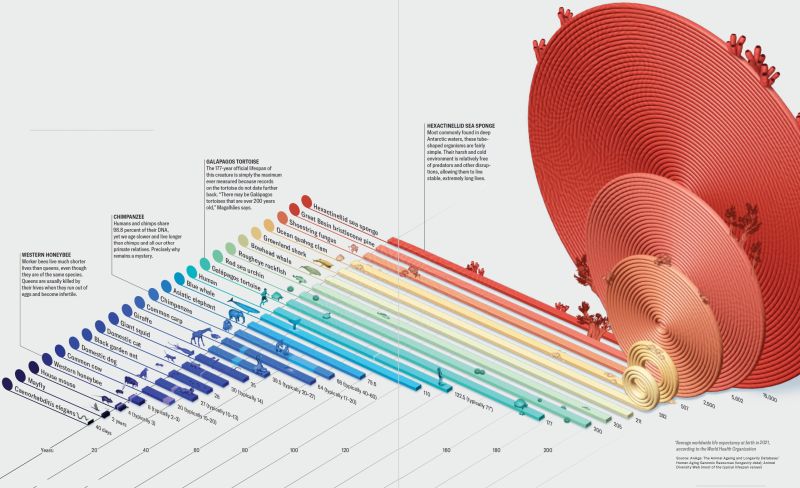
Why do some species live longer than others? This question reveals nature’s wisdom and humanity’s responsibility. Creatures like the Greenland shark or the Galápagos tortoise age slowly, protected by evolution. Others, like mice, live short, rapid lives. Science shows us that longevity is tied to resilience, DNA repair, and environmental safety.
What can we learn from these biological marvels, and how can we utilise this knowledge to improve our global society?
Life’s longevity is connected to ecosystem resilience, balance, and harmony. As stewards of this planet, we must combat the environmental threats – climate change, deforestation, pollution – that erode the delicate foundations upon which all species, including our own, depend.
Biological mysteries of ageing remind us of life’s moral and ethical dimensions. Just as these long-lived species thrive because they avoid disruption and enjoy protected environments, so must humanity create an enabling environment. This means prioritising access to healthcare, education, and social services, especially for the most vulnerable people in our societies. To live meaningfully is to live in service of others, ensuring that no one is left behind in the pursuit of progress.
These examples remind us of the urgent need to invest in science and research. Unravelling the mysteries of ageing in other species may one day unlock solutions to human challenges. But more than that, science gives us the tools to innovate, to adapt, and to thrive in a rapidly changing world.
#Longevity #Biodiversity #EcosystemResilience #ClimateAction #ScienceForGood #SustainableFuture #NatureWisdom #AgeingResearch #EnvironmentalStewardship #GlobalHealth

 Bapon (SHM) Fakhruddin, PhD