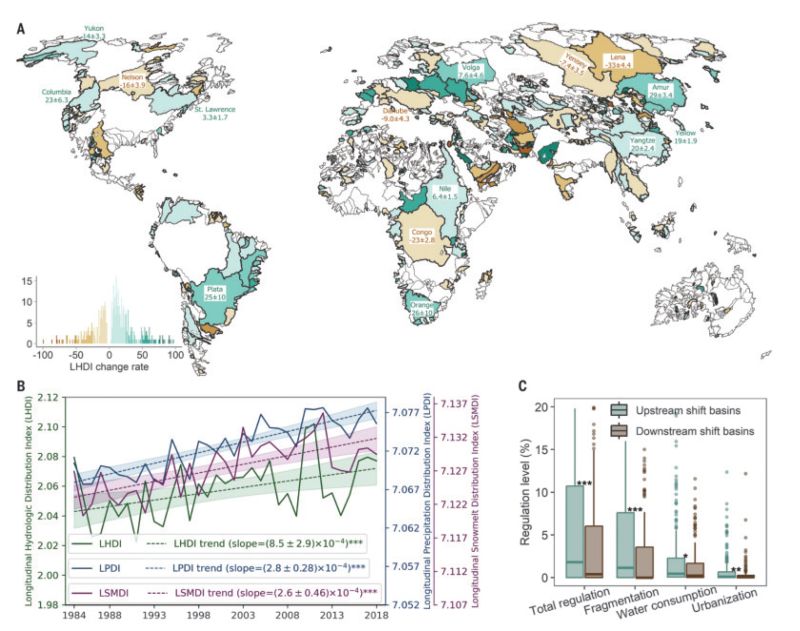
Recent research has revealed a startling trend: the flow of our global rivers is shifting. From 1984 to 2018, mapped daily streamflow in nearly 2.9 million rivers worldwide. The findings show river outlets are experiencing significant decreases in flow, while headwaters are seeing increases. This upstream shift in streamflow now affects 29% of the global land surface. These changes are signals of a hydrological transformation with far-reaching implications for our most vulnerable communities and ecosystems.
This transformation is not occurring in isolation. Climate change is a driving force, with warming temperatures causing upstream shifts in precipitation and snowmelt. Human activities, including urbanization, water consumption, and river regulation, are amplifying these changes. While upstream rivers are becoming more powerful, downstream rivers are losing their ability to sustain ecosystems and communities.
The impacts are already visible. For example- in the Himalayas, increased glacial melt and sediment transport are threatening hydropower facilities, a critical source of energy for countries like Nepal and Bhutan. In the Amazon, changes in streamflow are altering fish migration patterns, affecting local fisheries and food security. And in deltas around the world, reduced sediment transport is accelerating land loss and exposing millions to the risks of flooding and sea-level rise. To protect our rivers and the communities that depend on them, we must act on multiple fronts:
1. The upstream shift in river flow is a stark reminder of the urgency of addressing climate change. We must accelerate efforts to reduce greenhouse gas emissions, invest in renewable energy, and build resilience to climate impacts.
2. Rivers do not recognize political boundaries. We need a holistic approach that considers the entire river system, from source to sea. This includes sustainable water management, sediment transport, and ecosystem restoration.
3. The Global River Discharge Reanalysis dataset has shown us the power of “detail at scale.” By leveraging satellite data and advanced hydrological models, we can better understand and predict changes in river systems, enabling more effective decision-making.
4. We must prioritize the needs of those most affected by these changes. This includes investing in flood protection, sustainable agriculture, and alternative livelihoods, as well as ensuring equitable access to water resources.
5. Rivers often flow across borders, and their management requires transboundary collaboration. We must strengthen international agreements and foster partnerships to ensure the sustainable use and protection of shared water resources.
The health of our rivers is a reflection of the health of our planet. By protecting them, we protect ourselves, our ecosystems, and future generations.
#WaterSecurity #RiverBasins #Hydrology #FreshwaterEcosystems

 Bapon (SHM) Fakhruddin, PhD