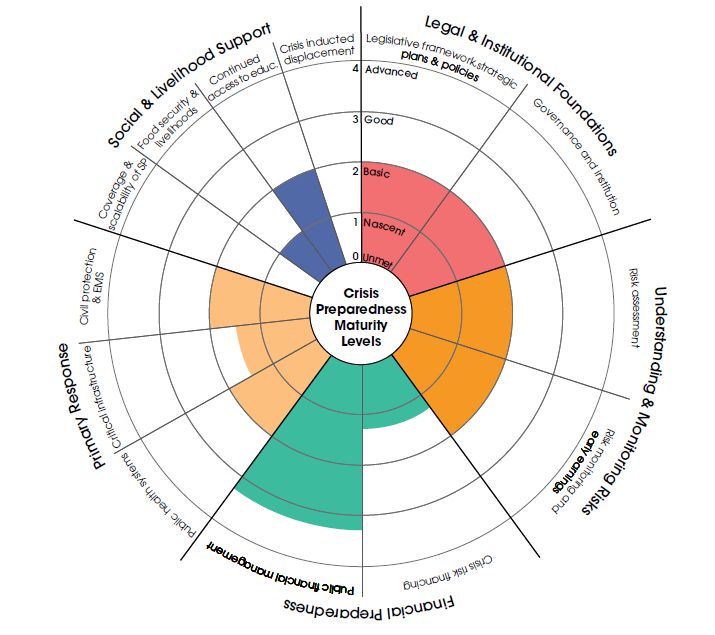
The recent Crisis Preparedness Gap Analysis (CPGA) by The World Bank highlights the urgent need to address Bhutan’s vulnerabilities to crises, particularly its exposure to natural hazards, the impacts of climate change, fragile infrastructure, and emergent social challenges. Bhutan has made progress, including enacting the Disaster Management Act of 2013, but there remains a pressing need to operationalize existing frameworks like the NDMA and to enforce multi-hazard contingency plans across sectors. Accurate and centralized risk monitoring systems and robust early warnings remain critical, especially for climate hazards like GLOFs, landslides, and disease outbreaks. Financial preparedness, too, requires urgent reform, with additional mechanisms like dedicated funds, sovereign insurance, and layered financial strategies needed to absorb high-impact disasters. Similarly, resilient infrastructure, from retrofitted schools and hospitals to multi-hazard-proof roads and water systems, is essential. Social protections must also evolve, scaling programs to safeguard vulnerable populations, ensure food and livelihood security, and address the needs of displaced communities during crises.
#CrisisPreparedness #DisasterResilience #ClimateAdaptation #Bhutan #NaturalHazards #EarlyWarningSystems #InfrastructureResilience #SocialProtection #DisasterManagement #GLOFs #LandslidePreparedness #ClimateRisk #ResilientCommunities #DisasterFinance

 Bapon (SHM) Fakhruddin, PhD