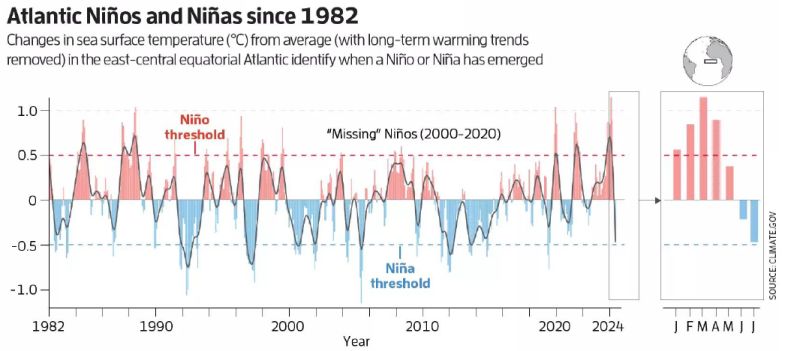
We have observed a rapid cooling in the equatorial Atlantic Ocean in the past three months. This is happening at a record speed. This emerging “Atlantic Nina” pattern and an expected La Nina in the Pacific Ocean present a complex interaction of climate forces that could have far-reaching impacts on weather patterns worldwide.
According to NOAA, global sea surface temperatures slightly decreased in July, ending a 15-month streak of record-high averages. This cooling trend shows the dynamic nature of our climate system and reminds us of the delicate balance that controls our planet’s weather. The Pacific El Nino, which faded in May, is expected to give way to cooler La Nina conditions by November. This shift is caused by strengthening equatorial winds, allowing colder waters to rise to the surface.
The implications of these oceanic shifts are significant. A cooling Atlantic could reduce storm threats in regions like Miami while affecting precipitation patterns in Africa’s Sahel and parts of Brazil. The interaction between the Atlantic and Pacific events could also affect the ongoing Atlantic hurricane season, potentially impacting storm formation and intensity.
It is crucial to acknowledge the interconnectedness of our climate systems. The potential tug of war between the Atlantic and Pacific oceans underscores the complexity of predicting climate outcomes. However, it also highlights the importance of continued research and collaboration in understanding these phenomena.
#ClimateChange #WeatherPatterns #OceanScience


 Bapon (SHM) Fakhruddin, PhD