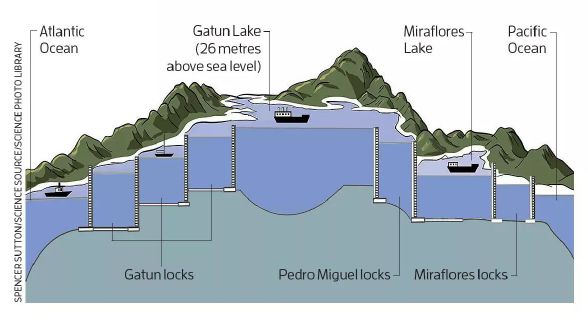
The Panama Canal is a man-made waterway that connects the Atlantic and Pacific Oceans. It is 50 miles long and consists of a series of locks that raise ships 26 meters above sea level. This allows ships to cross the Isthmus of Panama, a mountain range separating the two oceans. The canal is a vital part of the global economy. It enables ships to avoid the long and dangerous journey around Cape Horn at the southern tip of South America. This saves time and money, and it is essential for the transport of goods around the world.
In 2023, we saw one of the driest years in over a century, with October being the driest month on record. The lake hit several record monthly lows despite starting the year at total capacity. The implications are profound: reduced rainfall due to climate change and increased evaporation from warmer temperatures have led to severe water shortages.
Gatun Lake, the largest artificial lake in the world, feeds the canal. Gatun Lake is a vital source of water for the canal, and it is also a popular tourist destination. Climate change is causing the lake to shrink. This is because the lake is fed by rainfall, which is decreasing due to climate change. As a result, the canal is now facing a water crisis. In addition to the water crisis, rising sea levels erode the canal’s banks, and more extreme weather events are causing flooding and landslides. These challenges are making it more difficult and expensive to operate the canal.
The numbers speak volumes. The canal’s newer locks require approximately 170 million litres of water per ship passage. With traffic cut to 22 ships a day in December 2023—the lowest since 1989—economic repercussions have been felt globally. Panama and countries dependent on this route are experiencing a tangible strain.
The canal has had to restrict traffic in recent years due to low water levels. This has caused delays and increased costs for shipping companies. If the water crisis continues, it could eventually force the canal to close. This would have a devastating impact on the global economy. It would also make it much more difficult to transport goods around the world.
We need to invest in measures to protect the lake and ensure that it has a reliable water source. We also need to reduce our emissions of greenhouse gases, which are causing climate change. Locks are emptied to make ship passage possible across the 80-kilometre Panama Canal.
#climatechange #PanamaCanalCrisis; #ClimateActionNow; #WaterShortageAlert; #SustainableShipping; #ClimateChangeImpact
Bapon (SHM) Fakhruddin, PhD
Water and Climate Leader| Strategic Investment Partnerships and Co-Investments| Professor| EW4ALL| Board Member| Chair- CODATA TG| Award Winner (SDG 2021, EWS 2025)
Panama Canal Faces Water Crisis Amid Climate Change Threats

 Bapon (SHM) Fakhruddin, PhD