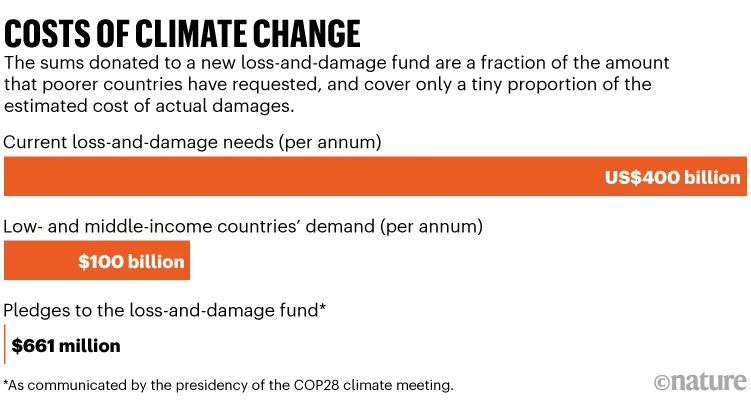
The historic decision at #COP28 to establish a loss and damage fund marks a new chapter in climate justice. As the first recipients are selected, prioritising principles of fairness, openness, and grassroots-led efforts is essential. Decisions about allocating resources should aim to level the playing field for vulnerable groups and be made transparently. Most importantly, funding should directly support initiatives designed and carried out by local communities impacted by climate hazards.
The extent of climate losses and damages across the globe is shocking and overwhelming in scale. Over the past two decades, climate hazards have caused $3 trillion in damages globally. In 2022, floods in Pakistan and Nigeria displaced over 9 million people. 2030 economic losses could reach $580 billion annually across the Global South. Small island states may lose up to a fifth of their GDP by 2050.
Yet current pledges to the fund represent less than 1% of projected needs. We may need to find some options for allocating these limited resources. Simple metrics cannot capture the complexity of climate vulnerability – the layers of social marginalization, lack of voice and chronic poverty that determine resilience.
As caretakers of this fund, we must learn from the past. Too often, well-intentioned aid fails to reach those most in need. Top-down programs designed in capital cities were out of touch with ground realities. Funds got stuck in bureaucracies or even fueled conflict instead of empowering communities.
This time, we must put affected populations in the driver’s seat. Local women’s groups, indigenous communities and civil society networks best understand local risks and solutions. They must be central in directing investments through participatory planning – not just as recipients but as decision-makers.
Robust safeguards are vital to ensure transparency, oversight and accountability in fund governance. Representation of vulnerable country blocs on managing boards can enhance equity.
Finally, the private sector must support resilience building as duty bearers and solution providers. Insurance instruments, climate-proof infrastructure, and early warning systems will be crucial to augmenting public funding.
The road ahead will not be easy. But this fund allows us to reimagine what an empowering, people-centred response to disasters could look like. With courage and collective action, we can yet deliver climate justice. The time for action is now.
Green Climate Fund, Adaptation Fund, CIF, Global Environment Facility, The World Bank, COP28 UAE, COP29 Azerbaijan

 Bapon (SHM) Fakhruddin, PhD