The cement industry presents a significant challenge in global CO2 emissions, contributing to over 7% of the total. The traditional process of cement production is highly energy-intensive. It emits a considerable amount of CO2 from burning fossil fuels to achieve the high temperatures needed in kilns and from the chemical reactions that occur during the manufacturing process, particularly the calcination of limestone.
Sublime Systems is exploring an innovative approach to address this issue. Their technology uses electrochemistry to reduce emissions by eliminating the need for high-temperature kilns. Instead, they utilize electricity to induce the necessary chemical reactions in water, which could be sourced from renewable energy, thus significantly reducing the carbon footprint of cement production.
Sublime’s approach is exciting because it targets the chemical aspect directly, potentially offering a more comprehensive solution. The success of such innovative technologies will be crucial for decarbonizing industries like cement, which are essential for modern infrastructure but currently have a significant environmental impact.
All relevant stakeholders should continue working to improve material properties, enhance renewable power supplies and overhaul standards and procurement practices to enable the adoption of emerging low-carbon cement solutions.
The cement industry’s inertia highlights why urgent economy-wide decarbonization policies remain essential — we cannot wait to begin emission cuts while hoping future technologies arrive in time. But just transitions depend on innovations like Sublime’s to open viable pathways in our hardest-to-abate sectors.
We must push for cement emissions to receive focused attention within my recently established Net-Zero Advisory Body. Our climate emergency demands that we quicken the pace of progress through both systemic change and targeted technology acceleration. It’s an uphill battle critical for reducing global greenhouse gas emissions and combating climate change.
Bapon (SHM) Fakhruddin, PhD
Water and Climate Leader| Strategic Investment Partnerships and Co-Investments| Professor| EW4ALL| Board Member| Chair- CODATA TG| Award Winner (SDG 2021, EWS 2025)
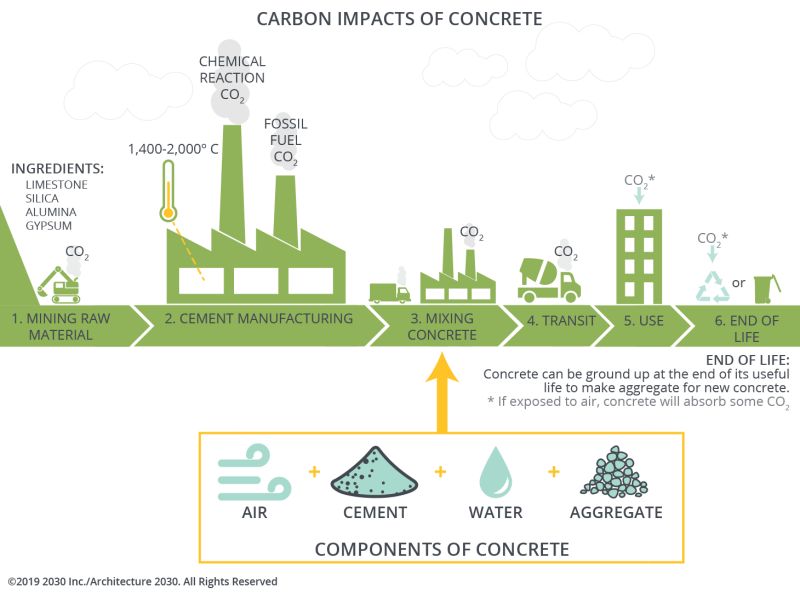
Carbon Impacts of Concrete

 Bapon (SHM) Fakhruddin, PhD