The relationship between climate change and infectious diseases like malaria, dengue, and Zika is complex. Different diseases are affected differently by climate change. Malaria transmission may decrease in some areas as temperatures rise, but dengue and other diseases spread by different mosquitoes are likely to increase.
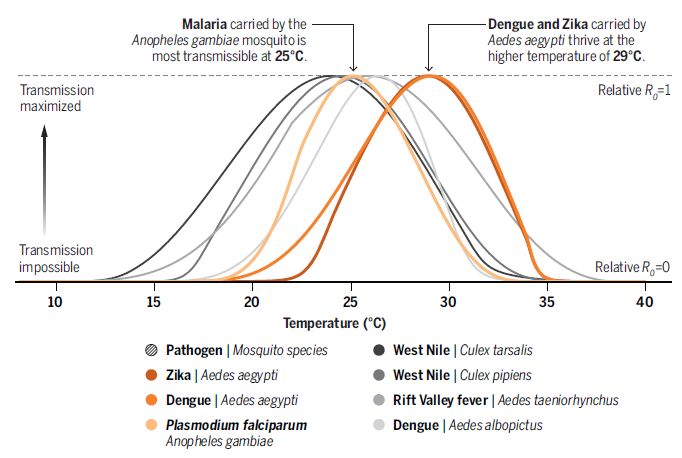
Rising temperatures will alter the spread of these mosquito-borne diseases in different ways. For malaria, carried by the Anopheles mosquito, transmission peaks at cooler temperatures around 25°C. In some regions, warming may actually reduce malaria transmission as temperatures climb beyond this optimum.
This could be welcome news for parts of sub-Saharan Africa. However, other diseases like dengue and Zika, carried by the Aedes mosquito, peak at warmer temperatures. As climate change drives more warming, places previously too cool for these diseases may see them spread into new areas. We could see more significant outbreaks of dengue, in particular, across the tropics and subtropics. Researchers like Colin Carlson and Erin Mordecai are using methods like climate econometrics to quantify climate change’s impact on malaria in Africa. Carlson estimates it has led to over 200,000 extra cases in children.
While malaria may decline in some areas, other mosquito-borne diseases are poised to expand their ranges and worsen as our climate warms. This is another reason we must urgently work to mitigate climate change and help vulnerable communities adapt.
We must improve surveillance to detect outbreaks early, especially of new diseases entering regions for the first time. And we must step up vector control and access to preventative measures like vaccines. Climate change multiplies health threats, but human ingenuity and cooperation can curb these threats. Together, we must meet this great challenge of our time.
Bapon (SHM) Fakhruddin, PhD
Water and Climate Leader| Strategic Investment Partnerships and Co-Investments| Professor| EW4ALL| Board Member| Chair- CODATA TG| Award Winner (SDG 2021, EWS 2025)
The Complex Relationship Between Climate Change and Infectious Diseases

 Bapon (SHM) Fakhruddin, PhD