The world’s ecosystems, the lifeblood of our planet, are under severe stress. According to the Intergovernmental Science-Policy Platform on Biodiversity and Ecosystem Services, about 75% of the Earth’s land surface has been significantly altered, and around 66% of the ocean area is experiencing escalating impacts due to human intervention.
Large transnational corporations (#TNCs) have a significant role to play. With their vast resources, they can be the catalysts for change, driving large-scale ecosystem restoration efforts.
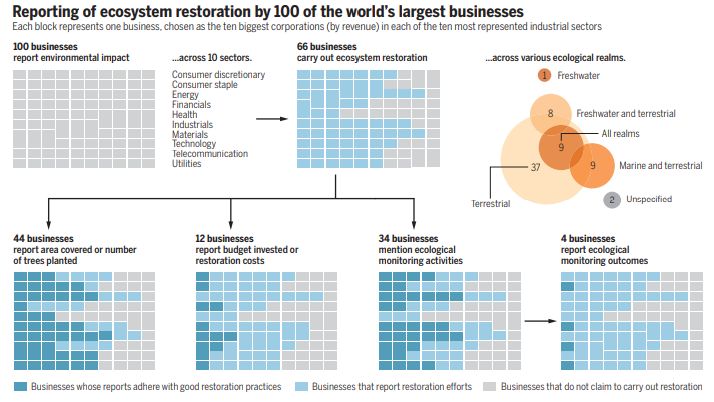
A recent evaluation of sustainability reports from 100 of the world’s largest businesses reveals a concerning trend. While most claim to contribute to restoration efforts, there is a lack of transparency and consistency in their reporting. This is not just about numbers on a page; this is about the future of our planet and the survival of countless species, including our own.
The impact of this lack of transparency is felt most acutely in vulnerable regions. In Sub-Saharan Africa, where nearly 65% of the land is degraded, and over 485 million people’s livelihoods are at stake. In small island nations like the Maldives and Kiribati, where rising sea levels threaten their existence.
We need a paradigm shift.
We need #CorporateAccountability. We need #TransparencyInReporting. We need #HolisticApproaches rooted in scientific principles. We need to ensure that corporate-led restoration is not just a marketing strategy or ‘greenwashing’, but results in tangible benefits for our ecosystems and communities.
To all the corporate leaders reading this post: I urge you to take this as a call to action. To embrace rigorous, consistent, transparent, and accountable reporting. To go beyond ticking boxes and make a real difference.
Together, we can turn the tide. Together, we can ensure a future where our planet thrives. The time for action is now.
Bapon (SHM) Fakhruddin, PhD
Water and Climate Leader| Strategic Investment Partnerships and Co-Investments| Professor| EW4ALL| Board Member| Chair- CODATA TG| Award Winner (SDG 2021, EWS 2025)
Call to Action: Corporate Transparency and Accountability in Ecosystem Restoration

 Bapon (SHM) Fakhruddin, PhD