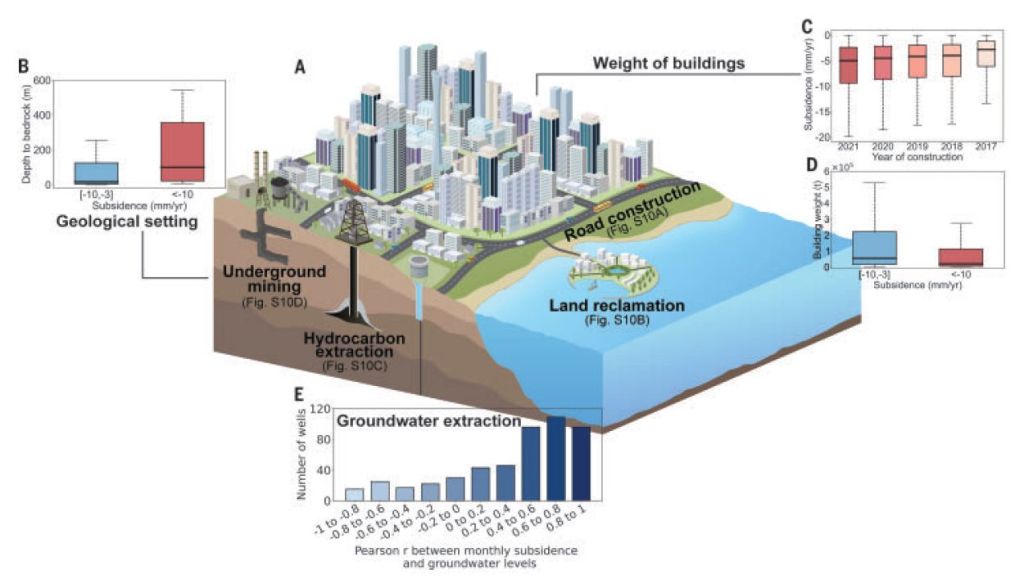
In recent years, we have seen alarming rates of subsidence in major cities around the world. From Jakarta to Mexico City, from Venice to Shanghai, the ground beneath millions of people is literally sinking. In China alone, a systematic assessment using spaceborne synthetic aperture radar interferometry has revealed that almost half of the urban land in major cities is subsiding at an accelerated rate. This is not just a local issue; it is a global one, with far-reaching implications for urban planning, infrastructure resilience, and disaster preparedness.
The study by Ao et al. (2024) paints a sobering picture of the extent of this problem in China, one of the most urbanized nations in the world. Their findings reveal that nearly half of the urban lands in major Chinese cities are subsiding at a rate faster than 3 millimetres per year, with 16% subsiding at an alarming rate of over 10 millimetres per year. This affects a staggering 29% and 7% of the urban population, respectively.
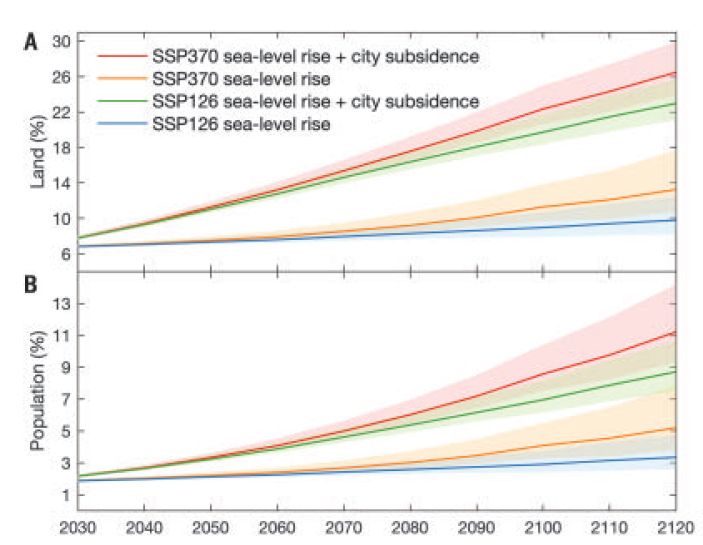
However, the consequences of land subsidence extend far beyond the immediate impacts on buildings and infrastructure. In coastal regions, subsidence amplifies the risk of inundation from rising sea levels, a threat that is compounded by the effects of climate change. The study projects that by 2120, between 22% and 26% of China’s coastal lands could have a relative elevation lower than sea level, potentially affecting 9% to 11% of the coastal population.
We must recognize that the Earth’s systems are intricately linked, and our actions have ripple effects that transcend borders and generations. Climate change, urbanization, and unsustainable resource extraction are all contributing factors to this crisis, and they must be addressed holistically.
These challenges are cascading and compounding. They do not respect national borders or discriminate between the developed and the developing world. They demand a concerted global response grounded in science and guided by equity and sustainability.

 Bapon (SHM) Fakhruddin, PhD