Imagine a world where all the plastic we produce can be endlessly recycled. Where facilities exist to transform any type of plastic waste back into valuable raw materials, ready to be used again and again in a truly circular economy. This is the promise of advanced recycling technologies that are emerging around the globe.
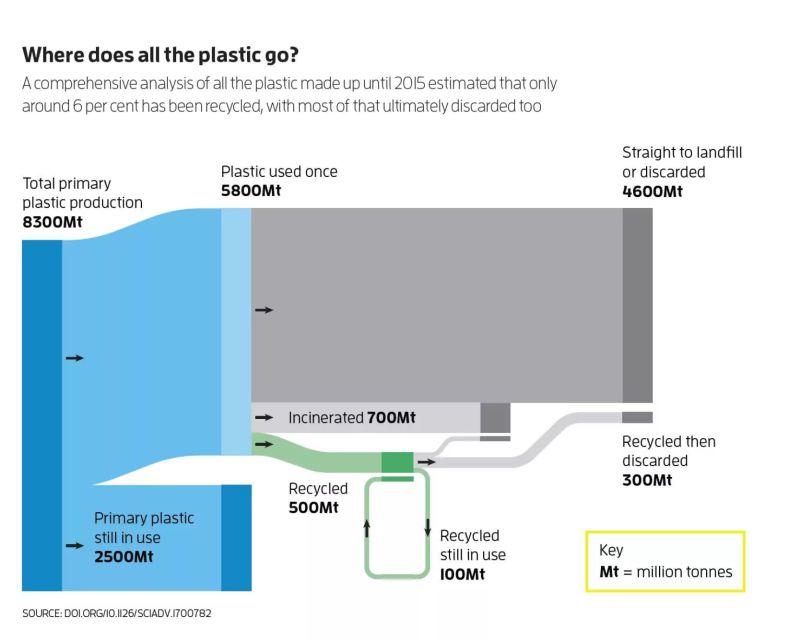
Over 10 billion tonnes of plastic have been produced since the 1950s, with over 8 billion tonnes of that ending up as waste. Each year, the world generates 350 million additional tonnes of plastic waste. Much of this ends up in landfills, incinerators, or polluting our oceans and environment. Microplastics have infiltrated every corner of our planet and our bodies. We are literally consuming the plastic we throw away.
But advanced recycling offers us a path forward. Through chemical processes like pyrolysis, gasification, and solvolysis, dirty and mixed plastic waste can be broken down into its basic chemical building blocks. These can then be purified and remanufactured into new plastics that are identical to those made from fossil fuels. Except now, that plastic can be recycled over and over, without limit. Other valuable chemicals can also be recovered in the process.
This is not a far-off dream, but a rapidly maturing suite of technologies. Over 100 advanced recycling projects are already operating or under development in Europe alone. The US has seen over $7 billion invested in this space since 2017. Major consumer brands are starting to put products in packaging made from these recycled plastics on store shelves. But to realize the full potential, we need coordinated global action. We need ambitious targets and policies to drive the adoption of advanced recycling and phase out virgin plastic production. We need support for further research and infrastructure development. And critically, we need to bring the public along, rebuilding trust in recycling systems.
Bapon (SHM) Fakhruddin, PhD
Water and Climate Leader| Strategic Investment Partnerships and Co-Investments| Professor| EW4ALL| Board Member| Chair- CODATA TG| Award Winner (SDG 2021, EWS 2025)
Advancing Towards a Circular Plastic Economy
Posted by
·

 Bapon (SHM) Fakhruddin, PhD