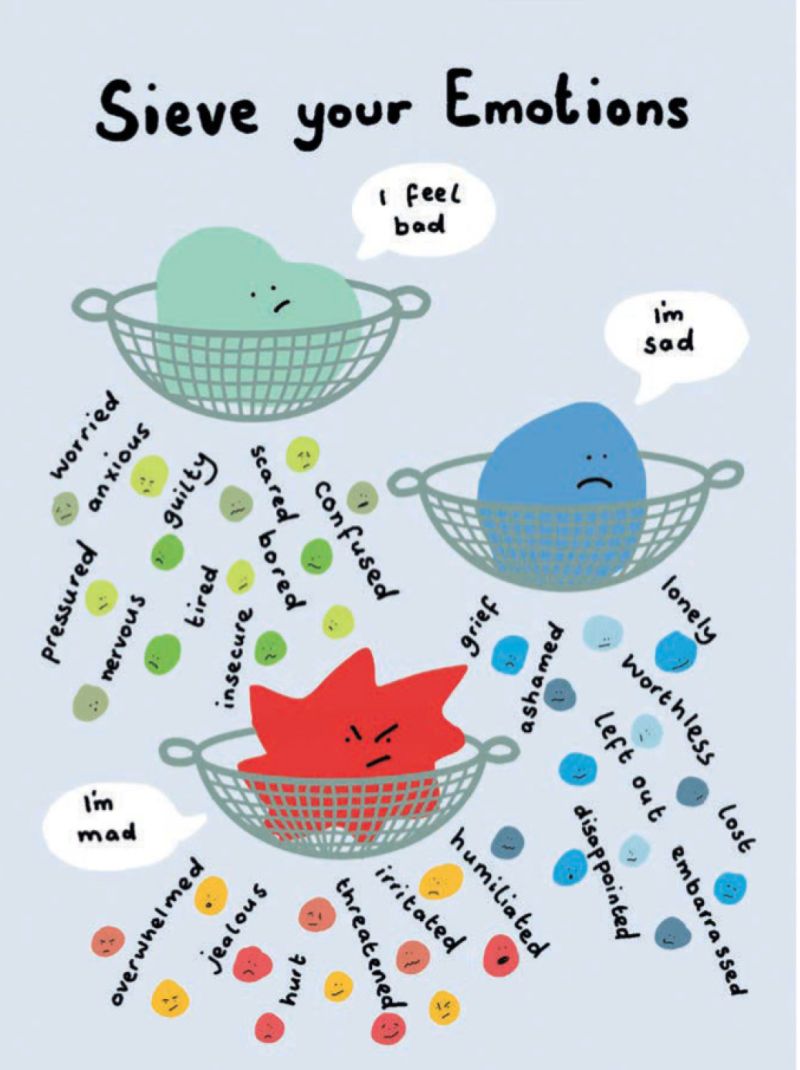
Today may be one of those days again, and I was searching for myself- how to be happier by increasing emotional granularity? Identifying and describing our emotions in detail is a skill called emotional granularity can help us better understand and regulate our feelings. People who use broad terms like “angry,” “sad,” or “stressed” have lower emotional granularity. This makes it harder to cope with difficulties and can contribute to downward spirals.
Increasing granularity gives our brains the gift of making better sense of daily sensations. We can respond more flexibly when we precisely name our emotions. Simply labeling an emotion has been shown to reduce stress.
To boost emotional granularity:
– When you notice yourself using a vague emotion word like “angry,” “sad,” or “happy,” dig deeper. Can we ask ourselves – what am I truly feeling?
– Use tools like emotion wheels to expand our vocabulary. Choose descriptive words like frustrated, jealous, and optimistic. We often feel multiple emotions at once.
– Apply these precise terms to our experiences. Linking words to sensations builds granularity over time.
– Remember that granularity isn’t just naming emotions. It’s using these names to understand and manage your feelings and reactions.
Increasing our ability to identify and describe emotions can help us gain insight into our experiences. We can better regulate our feelings and cope with life’s difficulties with greater granularity. Sharpening our emotional vocabulary takes practice but can lead to improved well-being.
Bapon (SHM) Fakhruddin, PhD
Water and Climate Leader| Strategic Investment Partnerships and Co-Investments| Professor| EW4ALL| Board Member| Chair- CODATA TG| Award Winner (SDG 2021, EWS 2025)
Happiness Through Emotional Granularity

 Bapon (SHM) Fakhruddin, PhD