The circular plastics economy is not only beneficial but also crucial for SIDs and other LDCs. It can help these nations protect their environment, mitigate climate change effects, and create new economic opportunities. Advanced research is key to realizing this transition and addressing the associated challenges.
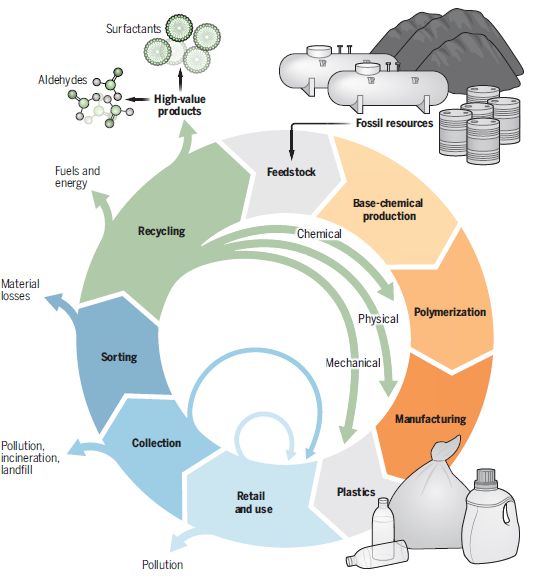
Advanced research plays a crucial role in supporting the transition to a circular plastics economy and addressing environmental and climate change challenges. It can provide innovative solutions for efficient plastic waste management, develop new recycling technologies, and create more sustainable materials. For instance, research can help improve the efficiency of mechanical, physical, and chemical recycling processes, making them more suitable for large-scale implementation. Furthermore, research can also contribute to the development of new materials with lower environmental impacts. For instance, biodegradable plastics or materials that are easier to recycle can significantly reduce plastic pollution.
There are several challenges to creating a circular plastics economy. It requires a change in the way that we think about plastic. We need to move away from the idea that plastic is a disposable material and towards the idea that it is a valuable resource. We need to develop new technologies for recycling and reusing plastic. Currently, only a small percentage of plastic waste is recycled as virgin plastic is way cheaper than recycled plastic. We need to develop new technologies that can make recycling plastic more efficient and cost-effective. We also need to change the way that we design and manufacture products. We need to design products that are easy to recycle and reuse. We also need to use recycled plastic in the manufacturing of new products. Despite the challenges, there is a lot of potential for a circular plastics economy. By developing new technologies and changing the way that we think about plastic, we can create a more sustainable future
Bapon (SHM) Fakhruddin, PhD
Water and Climate Leader| Strategic Investment Partnerships and Co-Investments| Professor| EW4ALL| Board Member| Chair- CODATA TG| Award Winner (SDG 2021, EWS 2025)
Research for a Circular Plastics Economy in SIDs and LDCs

 Bapon (SHM) Fakhruddin, PhD